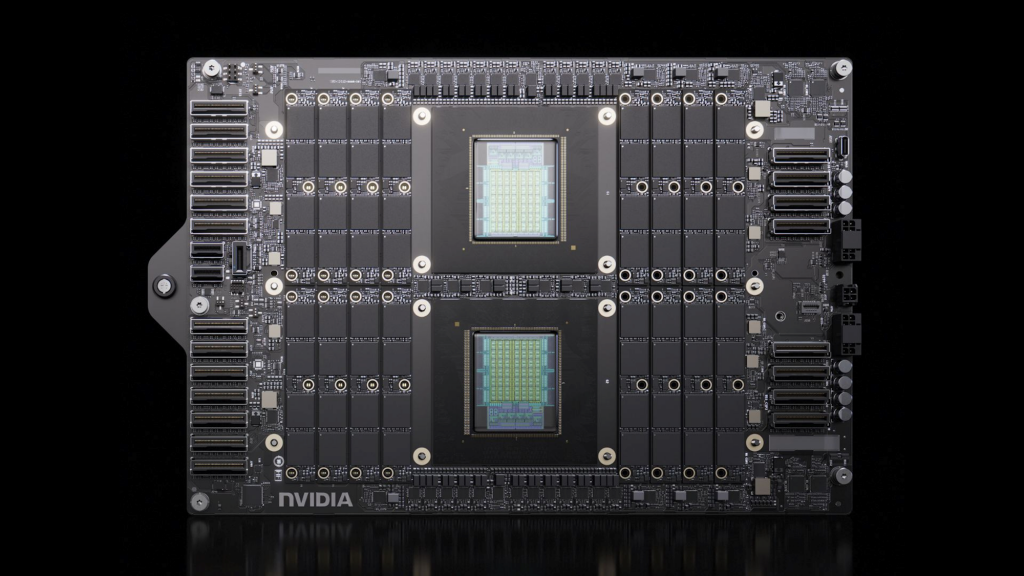
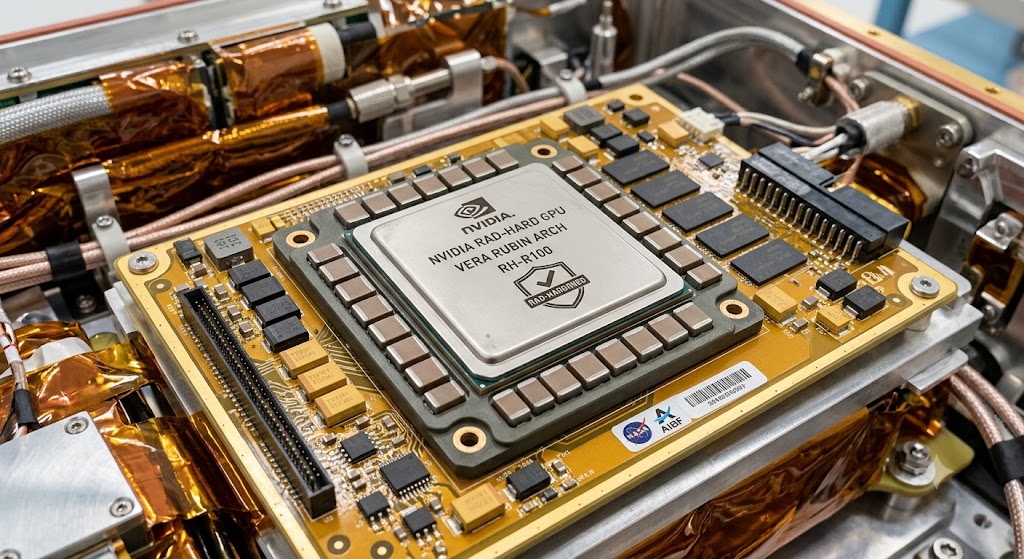
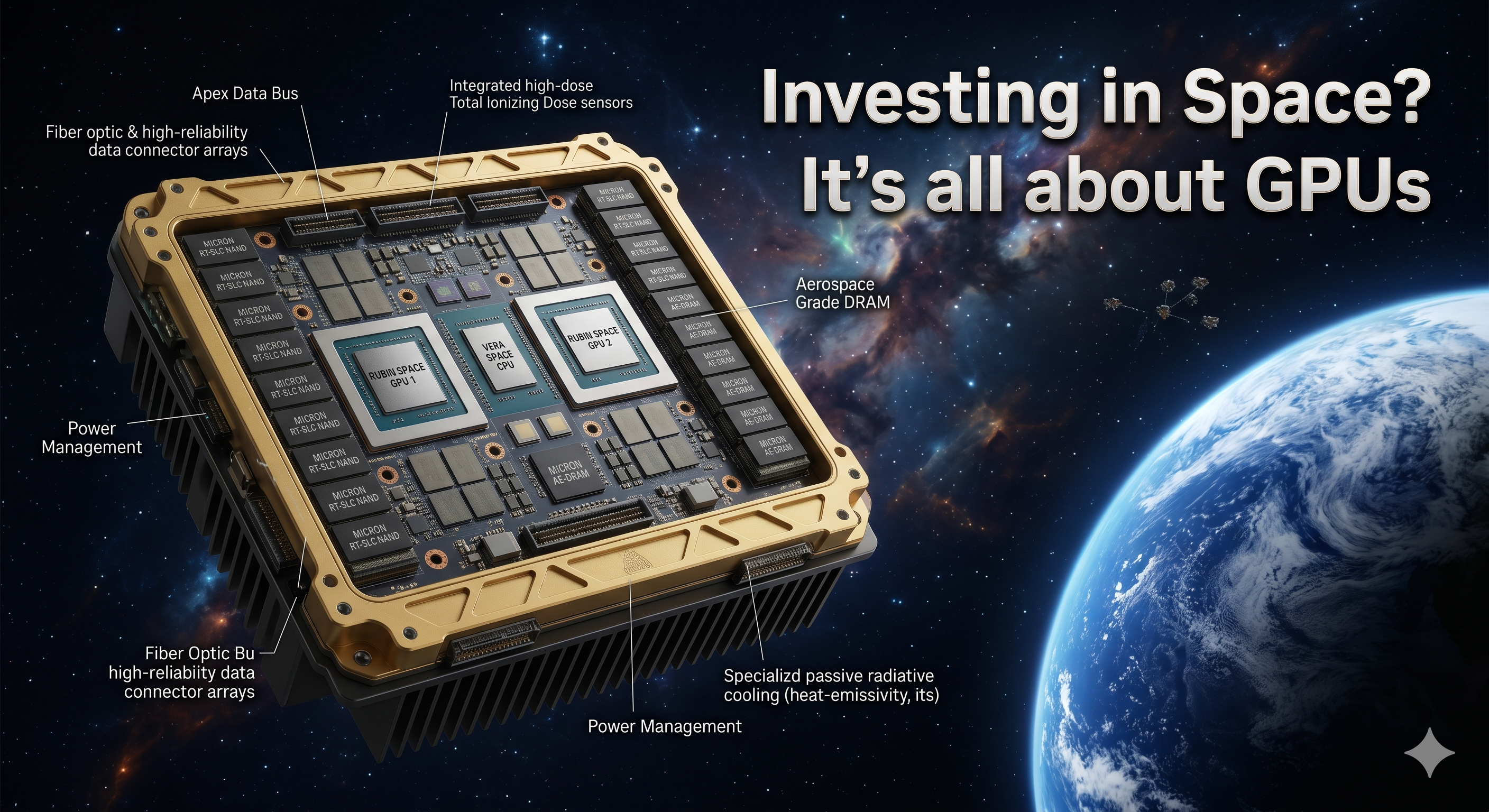
NVIDIA has officially unveiled the Vera Rubin platform, positioning it not just as a GPU refresh, but as a holistic, seven-chip AI supercomputer. Designed for agentic inference and test-time scaling, the architecture treats the entire data center rack as a single coherent domain to eliminate traditional bottlenecks in data movement.
The flagship configuration is the Vera Rubin NVL72, a liquid-cooled rack integrating 72 Rubin GPUs and 36 Vera CPUs connected via sixth-generation NVLink.
Key specifications and updates:
-
The 7-Chip Architecture: The platform unifies the Rubin GPU (featuring HBM4 memory), Vera CPU, NVLink 6 Switch, ConnectX-9 SuperNIC, BlueField-4 DPU, Spectrum-6 Ethernet switch, and the newly integrated Groq 3 LPU (following NVIDIA’s acquisition of Groq).
-
Performance Leaps: The Rubin GPU delivers up to 50 PFLOPS of NVFP4 inference compute per chip. At the rack level, it promises up to a 10x reduction in cost per token and can train large Mixture-of-Experts (MoE) models using one-fourth the number of GPUs compared to the previous Blackwell generation.
-
Availability: The platform entered full production in Q1 2026, with the first partner deployments (AWS, Google Cloud, CoreWeave) expected in the second half of 2026.
2026 Embedded Systems Trends
At the other end of the compute spectrum, the focus for embedded hardware has shifted toward Physical AI and highly resilient, decentralized architectures—concepts that are particularly relevant for systems operating in isolated or extreme environments.
Based on the recent Embedded World 2026 conference, here are the dominant shifts:
1. Decentralized Intelligence (The “Octopus Model”)
Instead of relying on a central processor or cloud connectivity, systems are distributing intelligence across edge devices. Sensors and peripherals are now making independent, localized decisions. This decentralized approach dramatically lowers latency and increases system resilience, ensuring operations continue even if central communications are severed.
2. AI Moves to the Microcontroller
AI acceleration has moved down the silicon stack. We are seeing a surge of AI-enabled MCUs featuring integrated neural processing engines optimized for tinyML. This allows machine learning inference to be embedded directly into core device logic, enabling autonomous sensing and action at a micro-level.
3. “Security-by-Design” and the CRA
With the EU’s Cyber Resilience Act (CRA) now actively impacting design, security is no longer a final validation step—it is a core architectural requirement. Development pipelines now mandate automated vulnerability scanning, secure boot processes, and SBOM (Software Bill of Materials) generation from day one. This is especially critical for embedded systems with long, 10-to-15-year lifecycles deployed in hard-to-reach locations.
4. RISC-V and Industrialization
RISC-V continues to gain massive traction as a vendor-neutral alternative, particularly for custom AI edge accelerators and industrial IoT. Simultaneously, platforms traditionally viewed as “prosumer” are hardening for industrial use. For example, Arduino has introduced dual-brain architectures for industrial control, and the Raspberry Pi Compute Module 5 (CM5) is being widely adopted for smart factory floors.
Related