NVIDIA’s New AI Blueprints: Bridging the Gap from Warehouse to Wardrobe
NVIDIA has officially unveiled two groundbreaking AI “blueprints”—the Multi-Agent Intelligent Warehouse (MAIW) and the Retail Catalog Enrichment systems. Launched on January 9, 2026, these open-source developer references are designed to transform the retail supply chain by moving beyond simple data visualization and toward proactive, agentic decision-making.
Solving the “Fire Drill” Mentality in Logistics
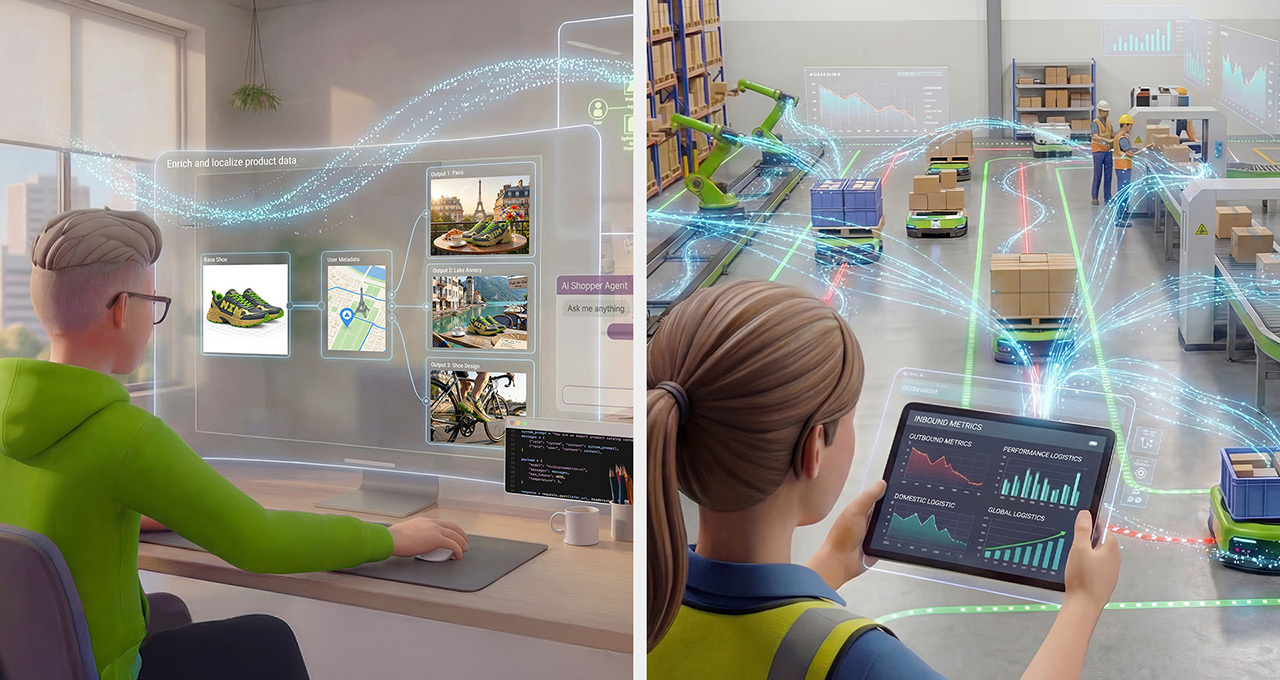
The MAIW blueprint addresses a long-standing pain point: the disconnect between Information Technology (IT) and Operational Technology (OT). By introducing an “agentic AI layer” between these systems, NVIDIA enables specialized agents to coordinate equipment, safety compliance, and forecasting. Instead of managers scrolling through complex dashboards, they can now use natural language to ask, “Why is packing slow?” The central warehouse assistant then analyzes real-time data to pinpoint bottlenecks and recommend immediate rebalancing of staff or tasks. This shift helps warehouses move from reactive “fire drills” to predictable, data-driven operations.
Automating the Digital Storefront
On the consumer-facing side, the Retail Catalog Enrichment blueprint tackles the “sparse data” problem. Retailers often receive product images with minimal descriptions, leading to manual, time-consuming onboarding. Utilizing the NVIDIA Nemotron vision language model, this blueprint can extract metadata from a single image—such as material, style, and capacity—and automatically generate localized, brand-aligned product descriptions and 3D assets. Partners like Grid Dynamics are already using these tools to ensure digital catalogs remain consistent and discoverable, directly boosting customer loyalty.
Integration with NVIDIA’s Broader Investment Strategy
These blueprints are a strategic extension of NVIDIA’s shift from a hardware-centric company to a full-stack AI platform provider. By offering “blueprints,” NVIDIA is not just selling GPUs; it is providing the architectural software layer that makes their chips indispensable to specific industries like retail and logistics.
This move aligns with three core pillars of NVIDIA’s ongoing investment strategy:
-
The Rise of Agentic AI: NVIDIA is doubling down on “agents” that can see, reason, and act, rather than just chat. This positions them at the forefront of the next wave of generative AI.
-
Industrial Digitalization: By integrating AI into the “OT” layer (robotics and IoT), NVIDIA is cementing its role in the physical AI space, ensuring its technology powers the robots on the warehouse floor, not just the servers in the cloud.
-
Ecosystem Lock-in: By providing open-source references, they lower the barrier for developers at firms like Kinetic Vision to build on NVIDIA’s stack, creating a massive ecosystem of enterprise-grade applications that require NVIDIA infrastructure to run efficiently.