






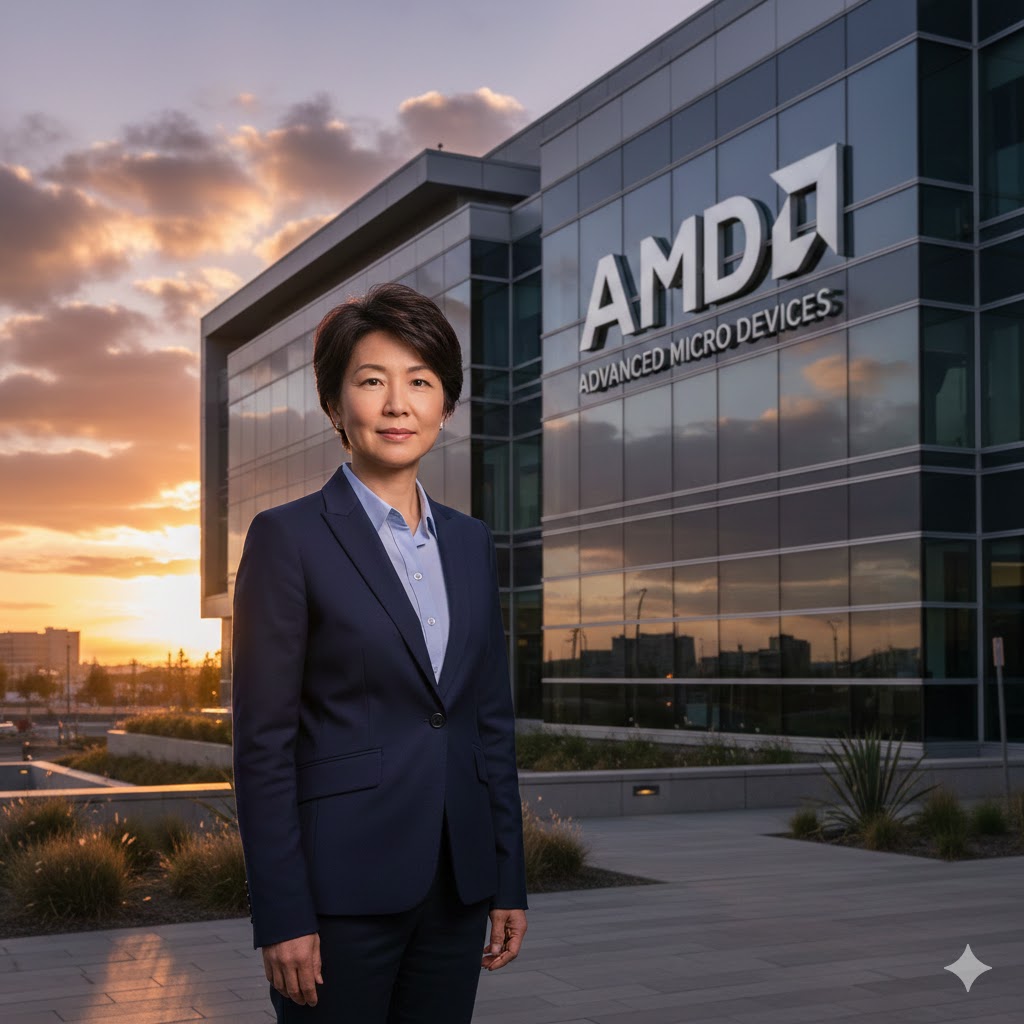
Advanced Micro Devices (NASDAQ: AMD) has officially unveiled its groundbreaking Ryzen AI Embedded processor portfolio, a significant leap forward in delivering AI-driven immersive experiences across various industries. Announced on January 5, 2026, these new P100 and X100 Series processors are poised to revolutionize applications at the edge, from advanced automotive systems and industrial automation to sophisticated physical AI for autonomous robots.
At the core of this innovation is a powerful, compact BGA (ball grid array) package that integrates AMD’s cutting-edge “Zen 5” CPU cores for scalable x86 performance, an RDNA 3.5 GPU for real-time visualization and graphics, and an XDNA 2 NPU for energy-efficient, low-latency AI acceleration—all on a single chip. This holistic design addresses the growing demand for high performance without the added complexity often associated with integrating multiple components. Salil Raje, senior vice president and general manager of AMD Embedded, emphasized that the Ryzen AI Embedded portfolio consolidates leadership CPU, GPU, and NPU capabilities, enabling smarter, more responsive systems.
The P100 Series processors, launching first, are specifically optimized for next-generation in-vehicle experiences and human-machine interfaces (HMI) in industrial settings. These processors boast 4-6 CPU cores, delivering up to a 2.2X multi-thread and single-thread performance boost over their predecessors. Designed for harsh, power- and space-constrained environments, they operate within a 15-54-watt range and support extreme temperatures from -40°C to +105°C, ensuring a 10-year lifecycle. The integrated RDNA 3.5 GPU provides an estimated 35% faster rendering, capable of powering up to four 4K or two 8K displays simultaneously at 120 frames per second, alongside a video codec engine for high-fidelity streaming.
A key highlight is the next-generation AMD XDNA 2 NPU, which delivers up to an impressive 50 TOPS (Trillions of Operations per Second), offering up to 3X higher AI inference performance compared to previous generations. This NPU is engineered to process voice, gestures, and environmental cues using advanced AI models like vision transformers, compact LLMs, and CNNs.
Beyond hardware, AMD has prioritized a robust and open software ecosystem. The Ryzen AI Embedded processors offer a consistent development environment with a unified software stack across the CPU, GPU, and NPU. This includes optimized CPU libraries, open-standard GPU APIs, and a native XDNA architecture AI runtime through Ryzen AI Software. The entire stack is built on the open-source Xen hypervisor-based virtualization framework, allowing secure isolation of multiple operating systems—such as Yocto, Ubuntu, FreeRTOS, Android, or Windows—to run safely in parallel. This open-source foundation, coupled with long-term OS support and an ASIL-B capable architecture, aims to reduce costs, simplify customization, and accelerate time-to-production for automotive and industrial partners.
The P100 Series processors with 4-6 cores are currently sampling, with production shipments anticipated in the second quarter. More powerful P100 Series processors (8-12 cores) and the even higher-performance X100 Series (up to 16 cores) are expected to begin sampling in the first half of the year, promising even greater capabilities for demanding physical AI and autonomous systems. AMD’s Ryzen AI Embedded portfolio marks a significant step towards a future where intelligent, responsive AI is seamlessly integrated into the fabric of our physical world.