The conversation around AI infrastructure is almost entirely focused on what gets added: more chips, more power, more capital. The number most people aren’t talking about is what gets wasted.
Across most data centers today, 85% of GPU capacity sits unused. Organizations are spending trillions of dollars building out AI infrastructure and extracting a fraction of what it can deliver. The assumption is that the answer is more silicon. The actual answer is better algorithms.
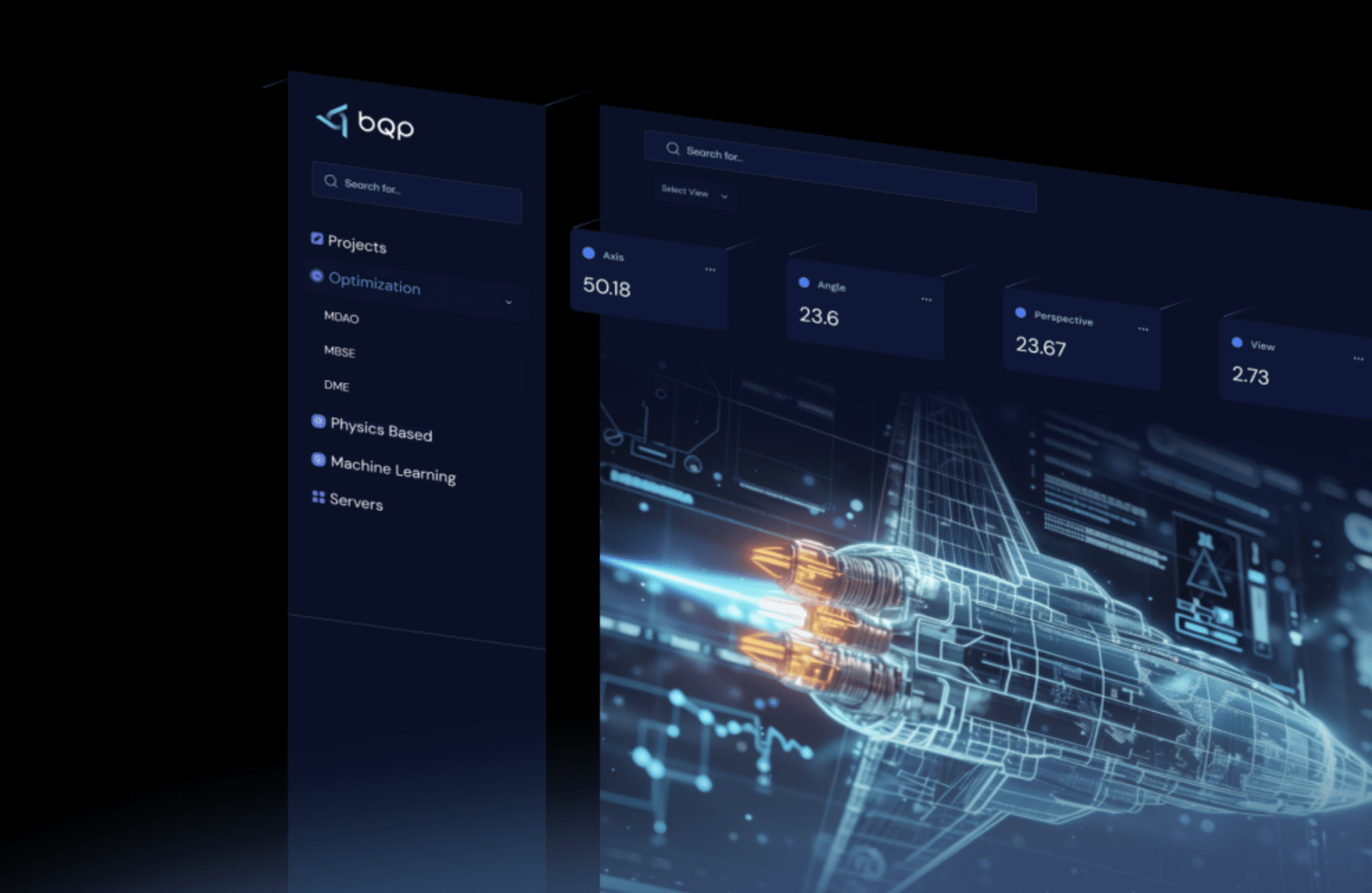
This is the problem BQP was built to solve. Not by waiting for quantum hardware to arrive at scale, but by applying quantum-inspired algorithms to the CPUs and GPUs that already exist. The same infrastructure that is currently running at 15% efficiency can be pushed significantly closer to its ceiling. More compute output from the same energy, the same hardware, the same capital investment.
The Infrastructure Efficiency Gap
High-performance computing has always had this problem, but it is becoming acute in the AI era. Data centers are not just storing and retrieving data anymore. They are running continuous, computationally intensive workloads: machine learning training, real-time inference, computational fluid dynamics, digital twin simulations, optimization problems at scale. The NFL schedules 32,000 games on 32,000 computers using classical algorithms that take weeks to run. These are not exotic edge cases. They are the kinds of problems every large organization is trying to solve faster and cheaper.
The bottleneck is not compute availability. It is compute utilization. Traditional software architectures were not designed to extract full value from modern GPU infrastructure. They leave enormous performance on the table.
Quantum-inspired algorithms change that calculus. By applying the mathematical principles of quantum computing to classical hardware, it is possible to extract meaningfully more throughput from existing infrastructure without buying more chips or building more data centers. At BQP, we call this QuantumNOW: quantum-level performance on the hardware organizations already own and operate.
Beyond Aerospace and Defense
BQP’s early work was concentrated in aerospace, defense, and semiconductor simulation, and we have deployed with partners including the Air Force Research Laboratory, Department of Defense, NVIDIA, IBM, Intel, and MathWorks. Those deployments validated the approach in the most demanding, high-stakes environments that exist.
But the infrastructure efficiency problem is not specific to aerospace. It is universal. The same quantum-inspired optimization methods that compress simulation cycles for defense engineering applications can improve training times for machine learning models, optimize network routing in data centers, accelerate autonomous vehicle simulation, and reduce the compute burden across a wide range of industrial workloads.

By Abhishek Chopra, Founder and CEO, BQP
About the Author
Abhishek Chopra is the CEO of BQP, a quantum simulation software company delivering quantum-inspired and quantum-native simulation for aerospace, defense, semiconductor, and data center infrastructure applications. BQP’s QuantumNOW platform is deployed with the Air Force Research Laboratory, U.S. Department of Defense, and partners including NVIDIA, IBM, Intel, and MathWorks.
Press Contact:
Ludington Media on Behalf of BQP
Olivia@Ludingtonmedia.com