


The Powerhouse of IoT: An Overview of the ESP32-S3
The ESP32-S3 is a high-performance system-on-chip (SoC) designed by Espressif Systems, specifically engineered to meet the growing demands of AI-accelerated Internet of Things (IoT) applications. Combining powerful processing, robust wireless connectivity, and specialized hardware for machine learning, it has become a staple for developers building everything from smart home hubs to industrial automation controllers.
Key Highlights
-
AI Acceleration: Features integrated Xtensa® 32-bit LX7 dual-core processors with added vector instructions to accelerate AI workloads and signal processing.
-
Enhanced Security: Provides a secure environment for connected devices with RSA-3280 based secure boot and AES-256-XTS based flash encryption.
-
Rich Peripheral Interface: Boasts 45 programmable GPIOs and supports high-speed Octal SPI flash and RAM, making it highly extensible for complex hardware projects.
Architecture and Performance
At the heart of the ESP32-S3 are dual Xtensa LX7 cores capable of running at up to 240 MHz. What sets this chip apart from its predecessors is the inclusion of vector instructions. These instructions allow the CPU to handle complex mathematical operations—crucial for neural network inference and digital signal processing (DSP)—much faster than standard microcontrollers. With 512 KB of internal SRAM and integrated 2.4 GHz Wi-Fi and Bluetooth 5 (LE) support, it offers a balanced mix of compute power and connectivity.
Versatility in Connectivity
The ESP32-S3 excels in communication. It supports Wi-Fi 4 with a 150 Mbps data rate and Bluetooth 5 (LE) with Long Range support. This combination ensures that devices can maintain stable connections over large areas while consuming minimal power. Furthermore, the inclusion of a full-speed USB Serial/JTAG controller simplifies the development process, allowing for direct debugging and firmware flashing without the need for external USB-to-UART bridge chips.
Developer Ecosystem
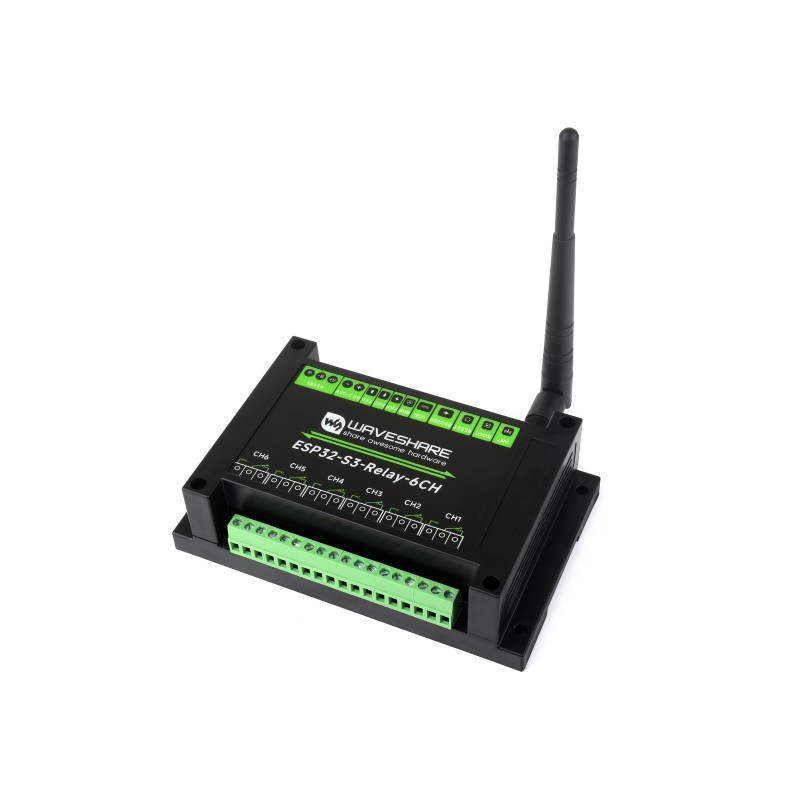
One of the strongest selling points of the ESP32-S3 is its massive ecosystem. It is fully compatible with the ESP-IDF (Espressif IoT Development Framework), but it is also widely supported in user-friendly environments like the Arduino IDE and MicroPython. This accessibility allows both industrial engineers and hobbyists to deploy sophisticated applications, such as the ESP32-S3-Relay-6CH, which leverages the chip’s GPIO density to control multi-channel industrial relays via web interfaces or MQTT.


Technical Specifications
| Feature | Specification |
| Processor | Xtensa® Dual-core 32-bit LX7 (up to 240 MHz) |
| Wireless | 2.4 GHz Wi-Fi (802.11 b/g/n) & Bluetooth 5 (LE) |
| SRAM | 512 KB Internal |
| ROM | 384 KB |
| GPIOs | 45 Programmable Pins |
| AI Support | Vector Instructions for acceleration |
| USB | 1x Full-speed USB OTG |
Pricing and Distribution Supply Chain
The ESP32-S3 is positioned as a cost-effective solution, typically priced between $2.00 and $5.00 USD for individual SoC units or modules (like the WROOM-1), depending on the flash and PSRAM configuration.
Distribution is handled through a global network of authorized partners:
-
Direct/B2B: Larger manufacturers often source directly from Espressif Systems.
-
Global Components: Specialized distributors like Mouser, Digi-Key, and Arrow Electronics maintain deep stock for worldwide shipping.
-
Hobbyist/Niche: Platforms like Waveshare, Adafruit, and Seeed Studio provide specialized development boards and modules integrated into specific hardware kits.
Yoast Focus Keyword: ESP32-S3
Meta Description: Explore the ESP32-S3: A dual-core AI-powered SoC with Wi-Fi & Bluetooth 5. Perfect for high-performance IoT projects.
Tags: ESP32-S3, IoT, Espressif, Microcontroller, AI Acceleration, Wi-Fi Bluetooth SoC, Embedded Systems
Would you like me to find specific code examples for the ESP32-S3’s AI acceleration features?

