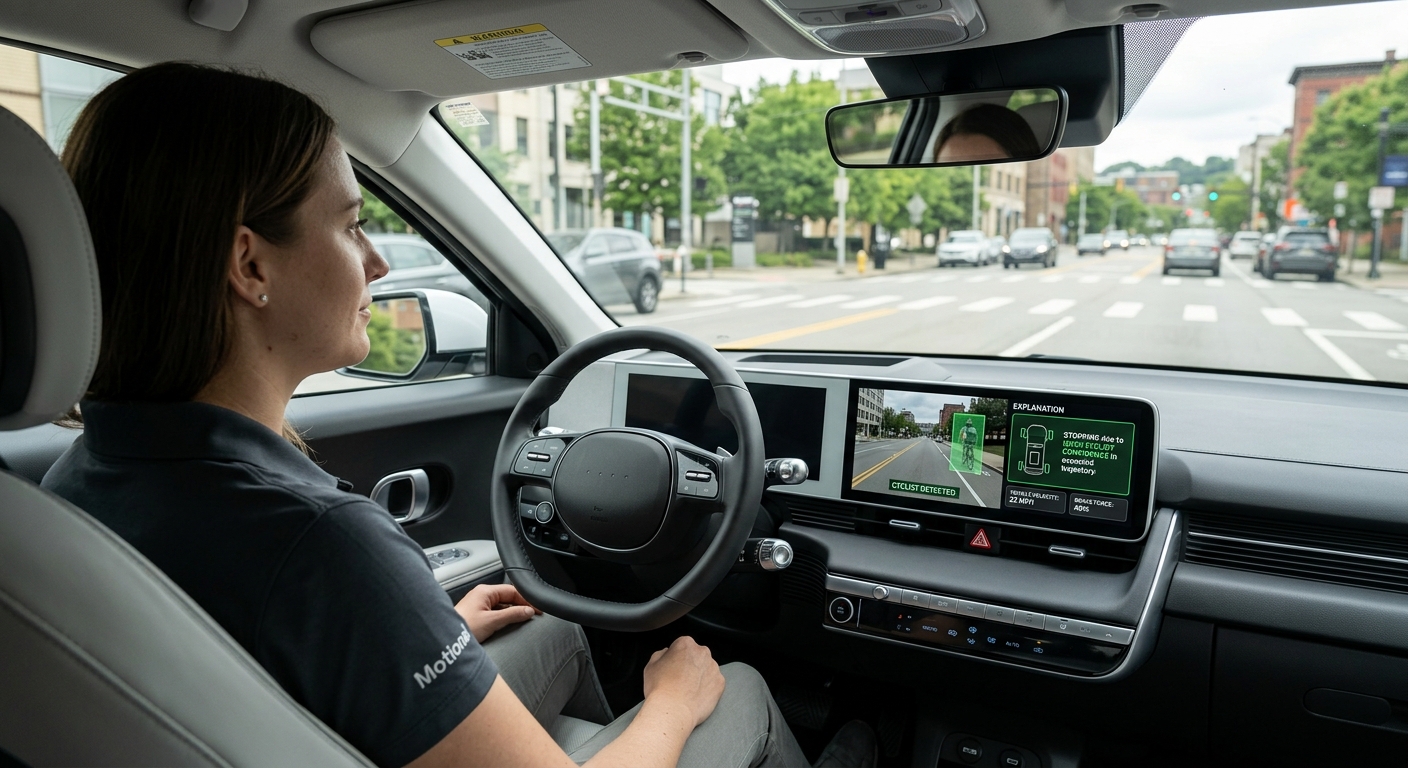





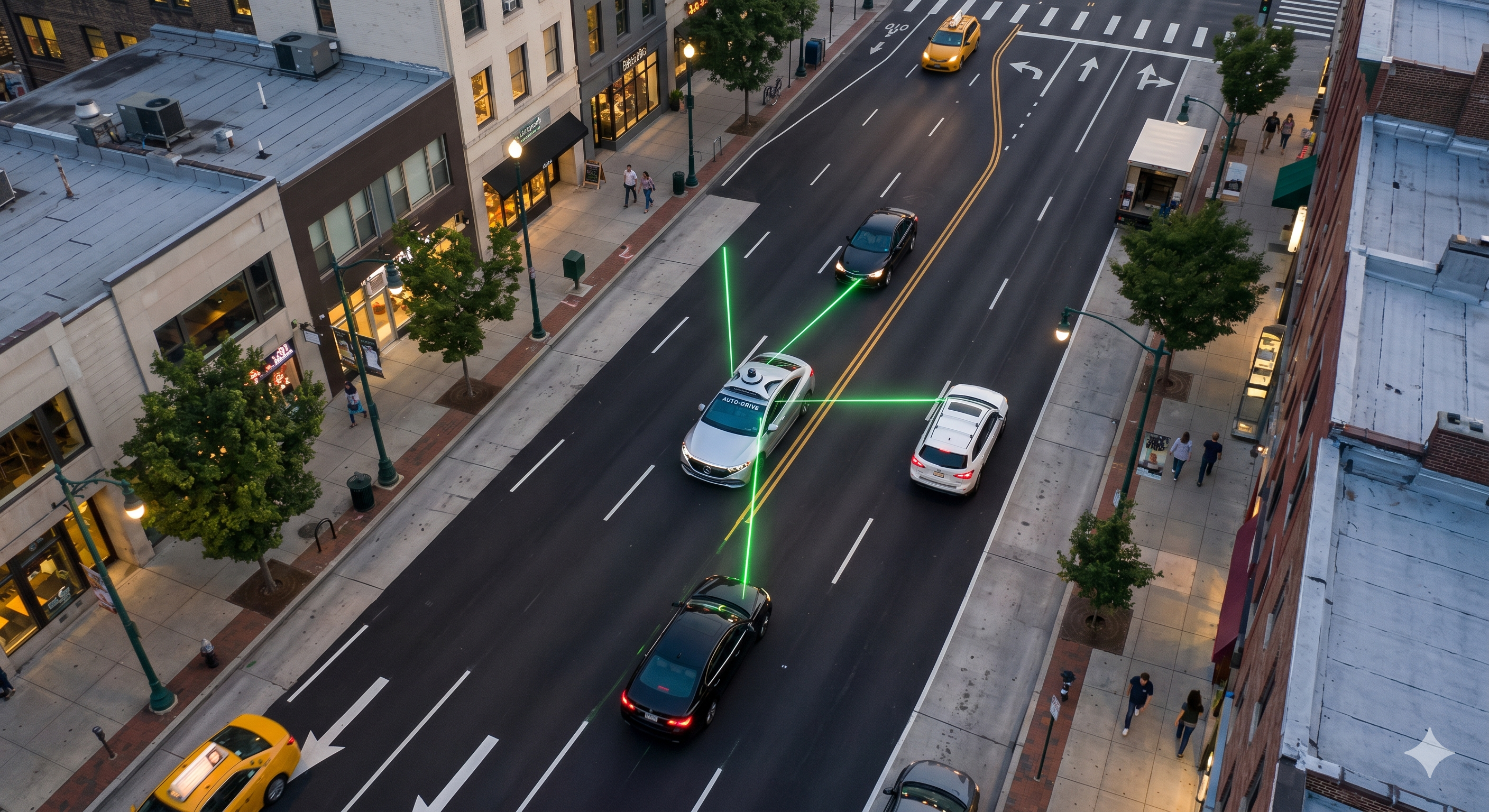
A June 2026 report by the B2B car company eCarsTrade identifies the countries most prepared for the integration of self-driving vehicles, emphasizing that the era of theoretical debate has ended and commercial reality has begun. The study moves past mere announcements or pilot programs, measuring readiness based on actual robotaxi deployment carrying paying passengers, alongside infrastructure quality, legal frameworks, and public sentiment.
The Global Leaders in AV Readiness
According to the study, the nations currently leading the race toward fully driverless environments are those that have successfully navigated the transition from controlled testing to real-world commercial service.
| Country | Overall Score | Robotaxi Status | Safety Driver | Road Quality (out of 7) | 5G Coverage | EV Chargers | Legal Category |
| China | 76.5 | Yes — Apollo Go, Pony.ai, WeRide | No for Apollo Go | 4.8 | 96% | 3,000,000+ | Advanced |
| United States | 73.5 | Yes — Waymo One | No for Waymo | 5.6 | 85% | 197,000 | Advanced |
| Singapore | 70.2 | Limited — robobus/shuttle services | Usually required | 6.7 | 95% | 2,000 | Advanced |
| Germany | 65.7 | Limited — L4 permitted, no large fleet | Not in L4 zones | 5.9 | 90% | 130,000 | Advanced |
| UAE | 64.7 | Yes — WeRide + Uber Abu Dhabi | No for WeRide + Uber | 6.4 | 99% | 1,000+ | Advanced |
| United Kingdom | 61 | Not yet — pilots expected 2026 | Not for authorised AVs | 5.5 | 80% | 65,000 | Advanced |
| South Korea | 60.8 | Limited — Seoul trials | Required | 5.8 | 100% | 250,000 | Developing |
| Netherlands | 59.4 | Limited — shuttles only | Required | 6.2 | 92% | 120,000 | Developing |
| Japan | 56.9 | Limited — L4 zones | Not in L4 zones | 6.1 | 96% | 90,000 | Developing |
| Sweden | 53.5 | Freight only — Einride | Required | 5.7 | 88% | 50,000 | Developing |
Source: https://ecarstrade.com
- China: Ranking first, China is propelled by the massive scale of its robotaxi operations—having recorded over 17 million rides—and near-universal 5G coverage, which provides the critical low-latency connections needed for autonomy. Apollo Go operates fully driverless vehicles without safety drivers, and the country boasts over 3 million EV chargers, facilitating the infrastructure necessary for electric fleets.
- United States: Securing the second spot, the U.S. is the largest commercial robotaxi market outside China, with Waymo completing approximately 500,000 paid rides weekly. While the infrastructure is advanced and the legal framework supportive of commercial driverless operations, the study notes that public sentiment in the U.S. remains more mixed, with concerns regarding traffic management and emergency response.
- Singapore: Placing third, Singapore emphasizes a methodical, world-class infrastructure approach, achieving the highest road quality scores in the study. While its 5G coverage and legal framework are advanced, the current robotaxi deployment remains more limited, often focused on shuttles that may still require safety drivers.
- Germany: Ranking fourth, Germany distinguishes itself as the first nation to legally permit Level 4 autonomous vehicles on public roads. While its legal infrastructure is robust and road quality is high, the large-scale robotaxi fleets observed in China or the U.S. have yet to fully materialize.
- United Arab Emirates: Rounding out the top five, the UAE features a strong partnership between WeRide and Uber in Abu Dhabi, offering fully driverless commercial service. With excellent road quality and the highest 5G coverage among the top five, the UAE benefits from a dense population that makes scaling infrastructure, such as EV charging networks, more manageable.
Industry Perspective
An expert from eCarsTrade emphasized that the autonomous vehicle industry has transitioned from debating potential to delivering service: “A robotaxi in a closed test track is a science project. A robotaxi carrying a real person across a busy city is a business”. The study concludes that technology improves significantly faster when forced to confront real-world challenges, such as busy city streets, varying weather conditions, and unpredictable human drivers, moving beyond controlled simulations to address actual operational obstacles. Complete research findings are available through the eCarsTrade study report.
Methodology and Assessment Criteria
The research analyzed 15 countries across four key areas to determine their readiness for driverless commercial deployment:
- Adoption: This metric focused exclusively on robotaxis actively carrying paying passengers, excluding pilot programs and announcements.
- Infrastructure: Evaluators assessed road quality, the reach of 5G networks, and the density of EV charging infrastructure.
- Legal Frameworks: The study categorized nations based on whether they have passed specific laws enabling commercial driverless operations.
- Public Sentiment: Researchers synthesized public perception through surveys and the analysis of 76 Reddit threads.
The report notably excluded driver-assist systems, such as Tesla’s Autopilot, because they still necessitate a human driver to supervise the vehicle.
By the Science
The Scientific and Research Perspective
While the industry is celebrating commercial progress, the scientific and research community maintains a more cautious, technically grounded view. The consensus focuses on three critical “bottlenecks” that must be resolved before AVs can move from controlled commercial pockets to widespread, reliable adoption.
1. The Challenge of “Edge Cases”
The primary technical hurdle remains the “long tail” of driving scenarios—rare, unpredictable, or highly complex situations (edge cases) that occur infrequently but are critical for safety. Researchers emphasize that while AI has become excellent at “normal” driving, human drivers possess an innate, contextual intelligence that allows them to navigate ambiguity (e.g., erratic pedestrian behavior, complex construction zones, or severe weather) in ways that current AI struggle to replicate reliably.
- Scientific View: Training an AI to handle every possible edge case via real-world driving is prohibitively time-consuming and costly. Researchers are increasingly turning to Large World Models (LWMs) and advanced simulation to bridge this gap, but there is no scientific consensus that simulation can perfectly replicate the entropy of the real world.
2. Validation and Safety Metrics
A recurring theme in research is the difficulty of validation. It is one thing to demonstrate that an AV can drive; it is another to prove it is statistically and consistently safer than a human driver across all conditions.
- Scientific View: Many researchers argue that we lack a standardized, robust way to evaluate and validate AV performance at scale. Because AV failures often “look different” from human errors—even if an AV is provably safer by raw crash statistics—these failures can trigger significant public mistrust. Validating that a new software update is genuinely safer than the last remains an ongoing research challenge.
3. Socio-Technical Integration
The scientific community often highlights that AVs should not be studied in a vacuum. Researchers from organizations like the Union of Concerned Scientists argue that the impact of AVs on society—whether they reduce or increase congestion, pollution, and social inequality—depends entirely on policy, not just the technology itself.
- Scientific View: There is a strong push to ensure AVs complement mass transit rather than replace it. If AVs simply increase vehicle miles traveled (VMT) without being integrated into a clean, shared, and accessible transport network, they may exacerbate the very urban planning problems they were designed to solve.
Further Reading
For those interested in the rigorous academic and policy-driven side of these developments, the following resources provide a deeper look:
- The Future of Autonomous Vehicles: Challenges and Opportunities: A comprehensive review that breaks down the multifaceted hurdles—including ethics, regulation, and liability—that the industry must still navigate.
- Exploring New Methods for Increasing Safety and Reliability of Autonomous Vehicles: Research from MIT engineers detailing how mathematical frameworks like queueing theory can be used to manage AV fleets through remote human supervision, addressing one of the core reliability bottlenecks.