ADVERTISE WITH USReach Embedded Science readers →
Bidirectional GaN Could Change How Power Converters Are Built
Renesas' 650-V bidirectional GaN switch could replace paired FETs and simplify solar, battery, EV and AI power converters.
Renesas Electronics’ TP65B110HRU uses a single GaN-based device to conduct current and block voltage in both directions, potentially eliminating pairs of conventional back-to-back power transistors used in many converters. Rated for ±650 V continuously and ±800 V transient operation, the 110-mΩ device combines a bidirectional high-voltage depletion-mode GaN structure with low-voltage silicon MOSFETs. Renesas is targeting solar microinverters, battery chargers, AI data-center power supplies, motor drives and electric-vehicle systems. The significance extends beyond one transistor: bidirectional switching can enable simpler single-stage converter topologies with fewer devices and potentially smaller, more efficient power systems.
Key points
- A single TP65B110HRU can conduct current and block voltage in both directions, allowing it to replace conventional pairs of back-to-back switches.
- The device provides ±650-V continuous operation, ±800-V transient capability, 110-mΩ typical on-resistance and more than 100 V/ns dv/dt immunity.
- Renesas is showing bidirectional-GaN architectures for solar, EV charging, battery systems, industrial conversion and AI power supplies.
Why Power Converters Use Two Switches
Electrical power frequently needs to flow in both directions. A battery-storage system may charge from the grid and later return electricity to the grid. An EV charger may move power from the grid into the vehicle but could also support vehicle-to-home or vehicle-to-grid operation. Renewable-energy systems routinely have to manage changing directions of current and voltage.
Conventional power transistors are generally designed around one primary voltage-blocking direction. Engineers therefore commonly place two FETs back-to-back when they need controlled bidirectional switching. That works, but it requires two power devices, additional interconnections and additional PCB area. Renesas’s bidirectional GaN architecture is designed to perform that function with one device.
One Device Blocks in Either Direction
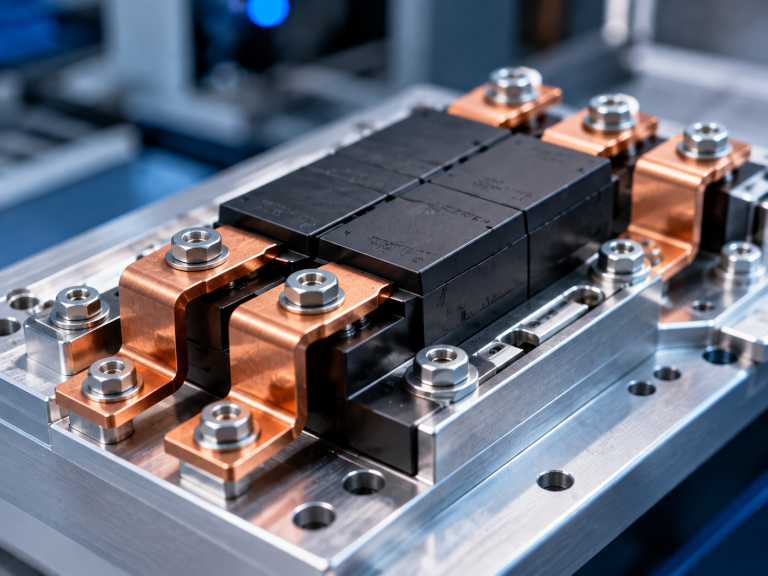
The TP65B110HRU is a common-drain bidirectional switch based on Renesas’s SuperGaN platform. It can block either positive or negative voltage and conduct current in either direction. Renesas rates the device for ±650 V continuously and ±800 V transient operation. Typical on-resistance is 110 mΩ at 25°C, while maximum current at 25°C is 24 A. Gate charge is 6.8 nC. The device is packaged in a top-side-cooled TOLT surface-mount package.
The fundamental advantage is topology: replacing two conventional switches with one bidirectional switch can change how the complete power converter is constructed.
GaN and Silicon Are Already Working Together Inside It
The TP65B110HRU combines a high-voltage depletion-mode GaN structure with normally-off low-voltage silicon MOSFETs. The GaN structure provides high-voltage bidirectional capability, while the silicon MOSFETs help create normally-off operation and a familiar gate-drive interface. The result has a typical gate threshold of 3 V, requires no negative gate drive and supports a maximum ±20-V gate-source range.
The Goal Is a Single-Stage Converter
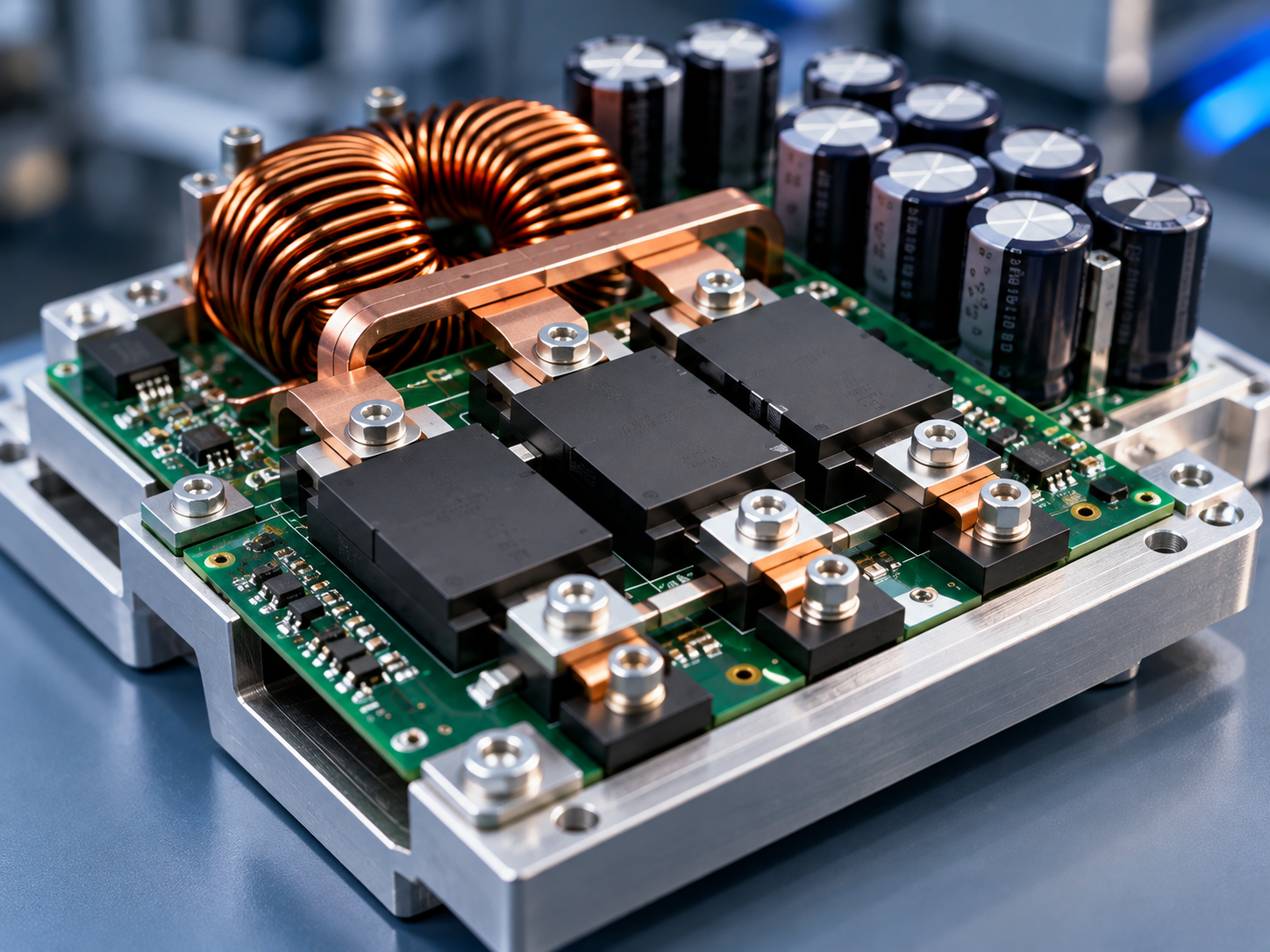
Reducing transistor count is useful; eliminating an entire power-conversion stage can be more important. Renesas says bidirectional GaN can enable single-stage AC/DC conversion in applications that currently use multiple stages. A conventional system may convert AC to DC, create an intermediate DC bus and then perform another conversion before reaching the final load or battery. Every stage requires switches, magnetics, capacitors, control electronics and space, and introduces energy loss. A single-stage topology can potentially reduce size, component count and losses.
Solar Microinverters Offer an Early Example
Renesas has developed a 500-W single-stage dual-active-bridge solar microinverter around the technology. Solar conversion is well suited to the concept because it must manage variable DC power from photovoltaic modules while producing controlled AC output. Reducing conversion stages can reduce the number of switching devices and energy-storage components in each microinverter.
Battery Systems Naturally Need Bidirectional Power
During charging, energy moves into a battery; during discharge, energy moves out. Back-to-back switches are common in battery-isolation and conversion circuits. A true bidirectional switch can potentially simplify those circuits in stationary storage, UPS equipment and vehicle battery systems. Renesas explicitly identifies battery chargers and UPS equipment among its target applications.
EV Charging Could Benefit Twice
Renesas has published a 6.6-kW single-stage onboard-charger architecture using a dual-active-bridge topology. Bidirectional switching could become more valuable as vehicles support power export. Vehicle-to-home and vehicle-to-grid architectures require power flow in both directions. Renesas is also applying the technology to three-level traction inverters and matrix converters.
AI Power Supplies Present a Different Opportunity
AI data centers also face power-density constraints. Every additional switch, capacitor, inductor and conversion stage consumes volume and produces losses. Renesas includes AI data-center and telecommunications supplies among intended applications. Bidirectional operation could also be useful as data centers integrate battery backup, renewable energy and DC distribution.
Fast Switching Still Matters
Renesas specifies more than 100 V/ns dv/dt immunity and support for hard- and soft-switching operation. The device also has negligible reverse-recovery charge. Higher-frequency switching can reduce transformer, inductor and capacitor size, complementing the reduction in device count.
Development and Availability
The 110-mΩ TP65B110HRU is the first production device in Renesas’s high-voltage bidirectional GaN family. Renesas states that it is available in quantity and offers the RTDACHB0000RS-MS-1 evaluation kit for testing gate-drive configurations, AC zero-crossing detection and zero-voltage soft switching.
Price, Purchasing and Delivery
Production ordering part: TP65B110HRU-TR. Package: TOLT, tape and reel. Renesas identifies Mouser, DigiKey, Farnell and Future Electronics as authorized purchasing channels. At the time of the source document’s inventory check, its distributor display showed zero inventory at those four channels; current stock should be confirmed before ordering. Renesas does not publish a direct unit price on the product page. Manufacturer status is active, with sample requests available.
First-Party Source Material and Further Reading
Renesas Electronics: TP65B110HRU product page and datasheet; High Voltage GaN Bi-Directional Switches: Strong Performance, Simpler to Use technical white paper; GaN Power Discrete Portfolio. Original manufacturer announcement: Renesas Unveils First Bidirectional 650V-Class GaN Switch For Solar Power Inverters, AI Data Centers and More, March 23, 2026. The white paper explains the common-drift-region structure; the datasheet provides electrical, switching and thermal specifications.
Editorial note: Specifications, availability and application claims are based on Renesas material; inventory and pricing can change.