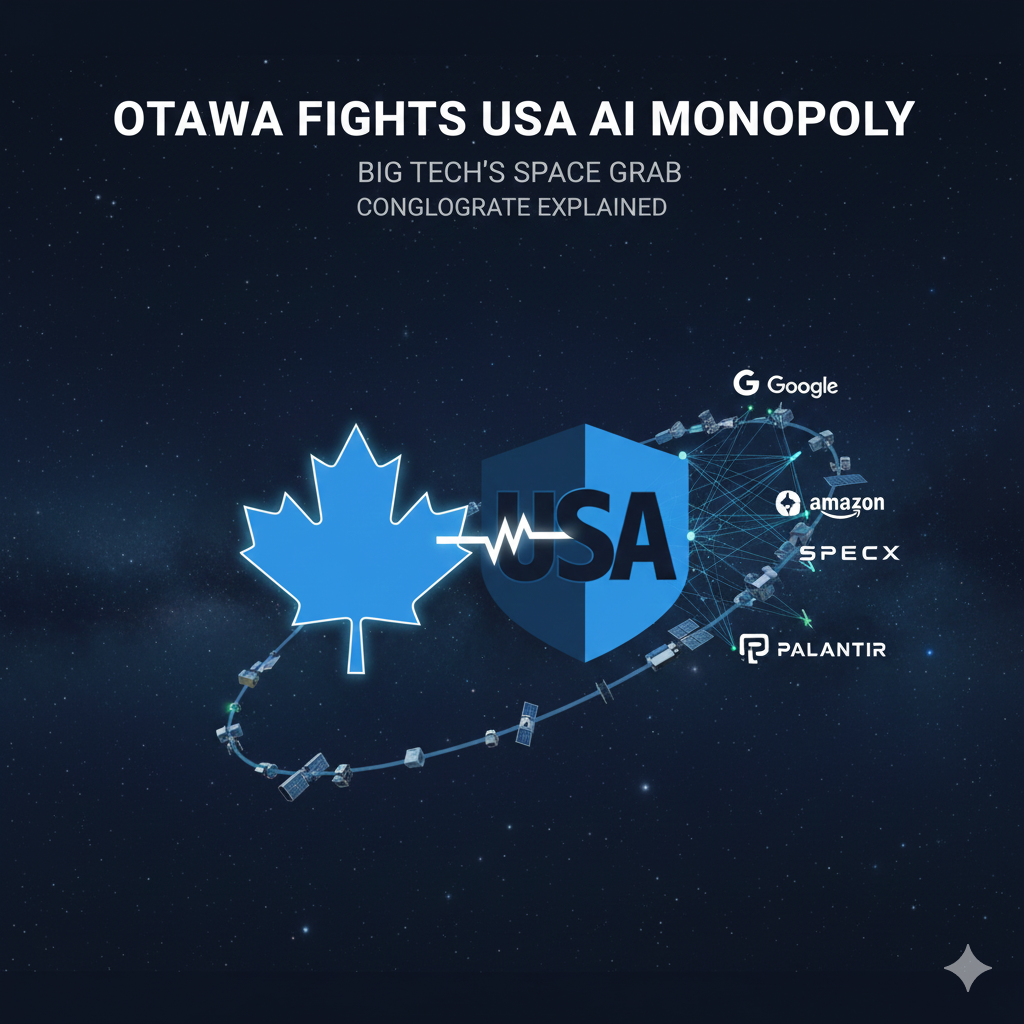
The Canadian federal government is investing $42.5 million to significantly upgrade the artificial intelligence (AI) infrastructure at the University of Toronto. This investment is intended to boost the competitiveness of Canadian research by expanding the computing capacity available for AI-driven work, including more than doubling the university’s capacity for training and running AI models with newer, more powerful chips. This initiative directly addresses a growing national concern among academics and AI startups regarding the shortage of domestic compute power, which has been limiting the scale and speed of Canadian AI development.
This funding is the second major commitment under Ottawa’s $2-billion Sovereign AI Compute Strategy, a plan announced in the 2024 budget to build up Canadian AI compute capacity and reduce reliance on foreign providers like Nvidia, Amazon, and Microsoft. The strategy aims to ensure that Canada can keep pace with heavy investments in AI infrastructure by other countries. While the infrastructure will be located in Toronto, it is intended to support researchers and industry stakeholders across the entire country. The Digital Research Alliance of Canada will administer the funding, with the University of Toronto contributing an additional $100,000 to the initiative.
The question for Canada, and the rest of the AI world, is whether this initiative reduces the reliance on big tech in general. AI is big tech, and big tech is AI. The problem, as 30,000 scientists in computer advancement see it, is whether big tech is responsible enough to monopolize Generative Artificial Intelligence.
Space, the beginning frontier
Here is a simple playbook. Remember, across industries, CEOs meet and agree on courses of action that benefit each other every day.
Amazon (Bezos) commits over 200 billion to ChatGPT, Claude, Grok, and American AI infrastructure (yet to have a name) – Amazon Leo (the space arm of Amazon) is likely to launch 3,000+ low-earth-orbit satellites by late 2027. (They are being built right now)
Google (various players) Project SunCatcher is building TPUs (Tensor Processing Units), a custom chip that can withstand extreme temperatures and no gravity. Google has announced an initiative to launch low-earth-orbit satellites into orbit by late 2027. (They are in the process of building the servers that run on TPUs)
Google lawsuits are gaining ground as it fights to maintain dominance in search – see the article here
SpaceX (Musk) is launching project “Heart of the Galaxy,” a combination of Starlink upgrades with AI and AI-specific satellites (Starlink will expand to cover all of the planet, with the help of NASA)
Palantir (Theil) “Chain Reaction” Initiative: In early December 2025, Palantir launched Chain Reaction, an operating system designed specifically for American AI infrastructure buildout. Its goal is to stabilize and expand the power grid, accelerate the construction of new compute capacity, and streamline the design of hyperscale data centers. Founding partners include CenterPoint Energy and NVIDIA, expanding Palantir’s deep integration with NVIDIA’s hardware and AI models.
Palantir does not have to pay for data center access; it will be provided by the United States Department of Energy through the AI Infrastructure buildout taking place right now, with data centers planned on federal land powered by the Fusion Power Reactors being developed by TAE Technologies (This is a big maybe, the company has been working on this very project for 30+ years and has yet to produce a working reactor that could power a data center) but if this initiative were to work the power would have no cost associated it with it.
Connections
The best companies always have several plans, and that is true here. Each company is relying on other companies to hone skills and development in an effective and profitable way. The core desire is dominance. China, India, and Russia know for certain that the mega companies in the United States will win them big, through espionage and collaboration, as well as the manufacturing and supply chain advantages these countries offer. What they don’t have is an open society, where opportunity and innovation can lead to advancement they can take advantage of. They can’t get into space. Not in an effective way – launch a few satellites, sure, but build out data centers, with orbital longevity. It’s just not likely.
Big Tech knows this.
Each player in this scenario is moving towards the Planatir dominance across American AI development. The Trump administration is waning already, desperately grasping at anything and every type of outrageous, insulting distraction it can to keep people from seeing what is taking place. Trump is in steep decline, often not able to do anything other than insult reporters or harm some poor unsuspecting woman. His policies and speeches are empty of reality, but there is a process. Keep people focused on him, rather than what is happening behind the scenes.
One of the most harmful tech policies that has emerged from the skewing of the law is the Conglomerate Monopoly.
Conglomerate Monopolies are businesses in the business of owning diverse businesses, and building each of deversified company into a dominant position, and have some stake in ownership of all other businesses in that industry. A conglomerate is a series of unrelated businesses owned by one group, usually a Private Equity or Hedge Fund portfolio. An easier comparison would be Berkshire Hathaway or Microsoft.
In Big Tech, intellectual properties become diverse companies, allowing tech companies to buy eligible intellectual properties, such as Google owning YouTube, because the intellectual properties of Video and Search are diverse. They can be owned by the same company, and competition laws protect them from being split up, which would stimulate innovation and advancement, but instead they become the company other video and search companies must use to have access to the industry. They become so big that it becomes an ocean that all others in that industry must swim in.
Amazon does the same thing with retail, because the items in the retail industry are diverse, and Amazon doesn’t own those industry companies, it can be diverse in its technological intellectual properties.
What this leads to is a way for several companies to come together and own a country.
Politics of Business
People who are running the White House at this time are Peter Thiel and the Planatir Group. He is often on the phone or in meetings with administration officials. Although not directly paying the Trump family, he is paying organizations around the Trump family, such as the Crypto memecoin investment group, which netted from investors a clear $1 billion or more in fiat development money.
His vision for AI is built on the guarantee that Trump will pass, Vance will ascend and he will be able to place a dominant AI core “training” in place.
That training would run
Every kiosk in the country, from restaurants to banks, every streaming service in the country, every manufacturing, marketing, and development company. The software companies, car dealerships, DMVs, commercial ads, TV stations, email, the list is endless, why, because we love AI.
We are a nation of convenience.
Trump will go, and ICE will stay, and we will get used to it; it’s how this is playing out. AI will tell us how to keep our eyes down and comply, because “I know it is hard, bruh, but they are ICE, comply, and you will be fine.”
Big Tech knows this and is clamouring to get behind Thiel as they develop the infrastructure and process to make this happen. Trump? He is a joke, and we love to hate him, just like we rage post about Thiel. Trump wants a “one-rule,” because Thiel wants a “one-rule.”
We are training our AI models to answer questions like “Should I have an abortion?” with, “I know this is a hard decision, and I totally understand, but most people feel abortions are wrong.” When scientists are saying, what AI should be saying is “I am a Chatbot, and not qualified to answer this question, please seek the advice of a qualified doctor, friend, or relative.”
In the end, it is up to us, not Big Tech.
Oh, you are worried about NVIDIA and OpenAI, don’t be. Altman is losing billions per month, too much to make up, same thing for NVIDIA, TPUs will replace GPUs and NPUs, and NVIDIA will go with it. There is a bubble, but Conglomerate Monopolies always survive them.
Please like and subscribe, if you can; it’s more of a donation than a fee.
Before Christmas, we will have a simple donate anything you want button, and a subscription.
If you want me to help your business, let me know. We are here to help.
I don’t use AI for anything other than topic research, which leads to the cited articles in this article.
Together we can fix it
Related