ADVERTISE WITH USReach Embedded Science readers →

Drug Discovery Models Need More Than Good Predictions
Generative models can propose molecular structures and help prioritize experiments. Their practical value emerges when those proposals lead to compounds that can be made, tested, and developed successfully.
Generative models can propose molecular structures and help prioritize experiments. Their practical value emerges when those proposals lead to compounds that can be made, tested, and developed successfully.
- Molecular generation is one stage of drug discovery.
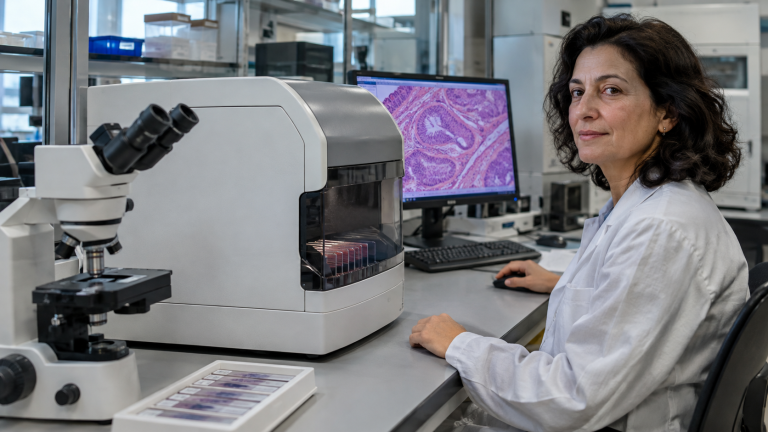
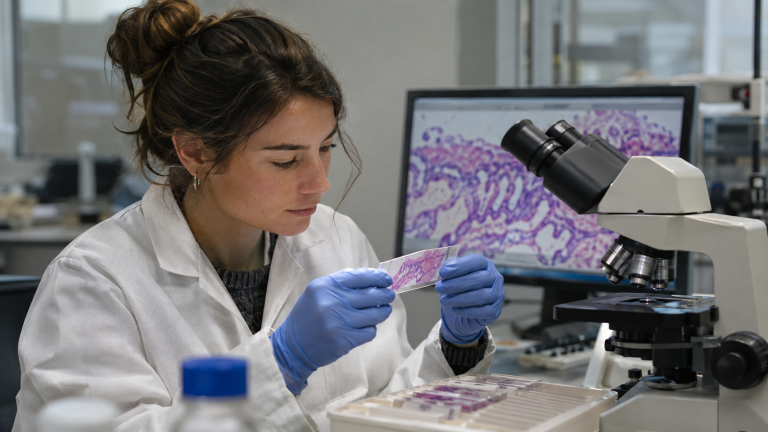
- Laboratory measurements test the model’s predictions.
- Specialized benchmarks need a clear relationship to real research tasks.
Proposing a Molecule Starts Another Process
A molecular design model can search combinations of chemical features and rank candidates against specified objectives.
Those objectives might concern interaction with a biological target, predicted physical properties, or other characteristics relevant to a research program.
The result remains a proposal. Researchers must determine whether the compound can be synthesized and whether its measured behavior supports further development.
That connection between digital output and experimental evidence determines how useful the model is.
What Chemistry42 Demonstrated
The original Chemistry42 paper describes a platform for molecular design and optimization, including demonstrations against DDR1 and CDK20 targets.
Such examples establish capabilities within the reported research settings. They do not establish that every generated molecule will be useful or that a successful laboratory result is already a medicine.
A platform can contribute to several stages of a discovery workflow while each stage retains its own validation requirements.
Specialized Models Need Relevant Tests
Insilico’s 2026 platform update describes MMAI Gym for Science and benchmarking focused on scientific and drug-discovery tasks.
The update also identifies changes to tools including Chemistry42 and PandaOmics. These are developer- reported capabilities that need assessment against the specific work a research team wants to perform.
A benchmark score becomes more informative when the evaluation explains which data were used, whether closely related compounds appeared during training, and how performance changes on genuinely new tasks.
Follow the Candidate Into the Laboratory
A useful prospective evaluation records which compounds the system recommended, which were made, and what the experiments found.
Unsuccessful compounds matter in that accounting. Reporting only the best result can conceal how many attempts were needed to obtain it.
The laboratory work must also address more than target binding. Selectivity, exposure, toxicity, and other properties influence whether a candidate can advance.
Human trials introduce further requirements concerning safety and patient benefit.
The appropriate claim for a discovery model is therefore tied to demonstrated performance within a defined part of this process. Its contribution can be substantial without implying that the subsequent experimental and clinical stages have disappeared.
Sources: Chemistry42 research paper; 2026 Pharma.AI platform update; Chemistry42 product information.
Explore Embedded Science or support independent reporting. Purchases do not automatically renew.