ADVERTISE WITH USReach Embedded Science readers →
Can AI Make Biomarkers More Useful?
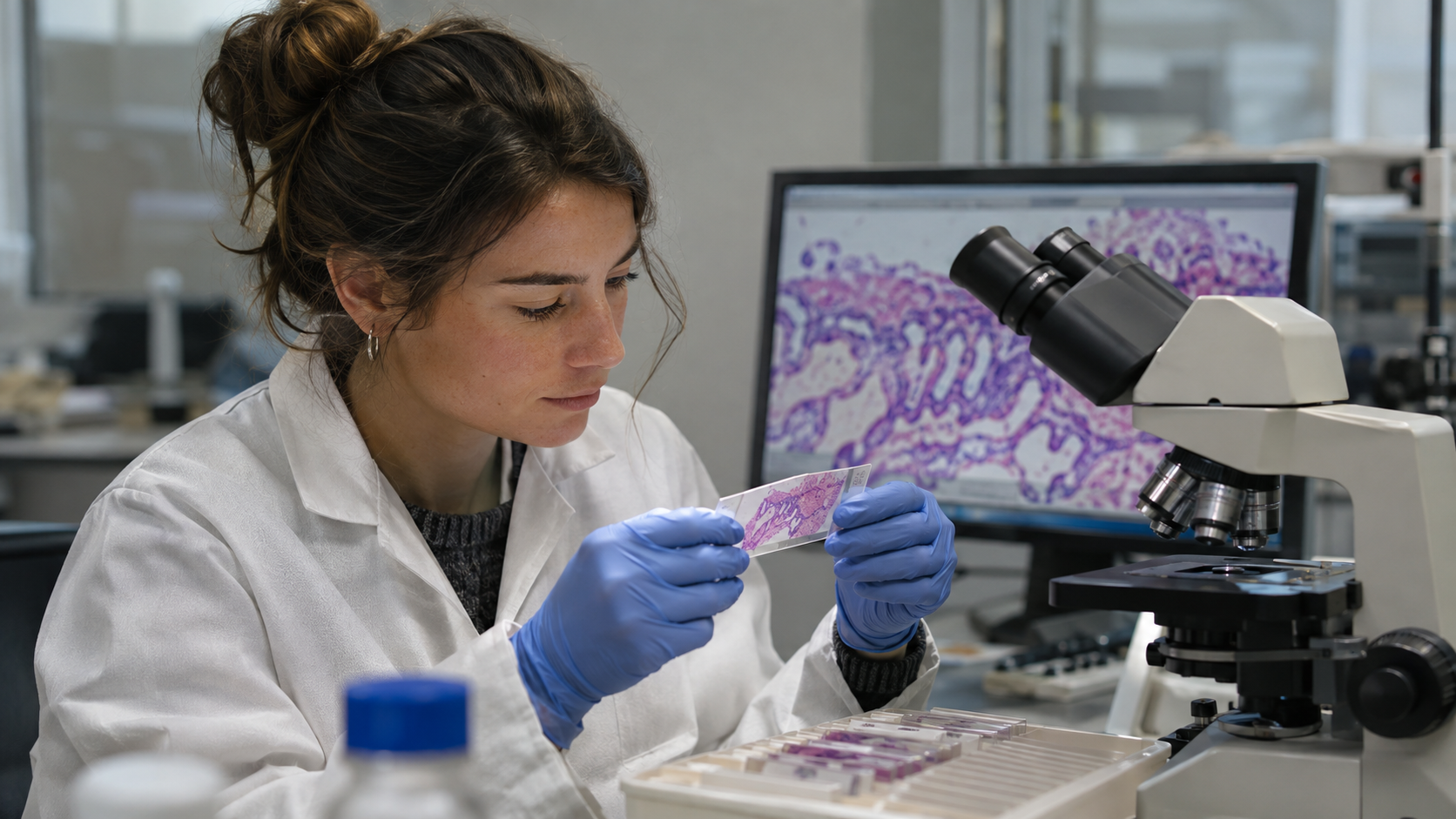
AI can help quantify tissue characteristics and organize biomarker workflows. The clinical value of those measurements still depends on what they predict and how reliably they support a defined use.
AI can help quantify tissue characteristics and organize biomarker workflows. The clinical value of those measurements still depends on what they predict and how reliably they support a defined use.
- Biomarkers measure characteristics associated with biological processes.
- Workflow improvements and predictive performance are different outcomes.
- Research applications require validation before broader clinical claims.
A Measurement Needs a Defined Purpose
The FDA describes biomarkers as measured characteristics indicating biological processes, disease processes, or responses to an intervention.
That category includes molecular, tissue, imaging, and physiological characteristics. A biomarker is distinct from a direct assessment of how a patient feels, functions, or survives.
This distinction matters when evaluating AI. Measuring a feature consistently can be useful, but its significance depends on the question being asked.
A marker associated with disease progression, for example, addresses a different question from one predicting response to a particular treatment.
Moving Earlier in Drug Development
Ibex announced an expansion into earlier biomarker development in January 2026.
The company described analytical modules and research applications involving tissue quantification, tumor characteristics, and clinical evidence generation. Those descriptions identify a development direction; they do not establish that every proposed marker has a validated clinical use.
An AI system can make measurements more repeatable or identify patterns worth investigating. Demonstrating that those patterns support treatment decisions requires additional evidence.
A Concrete Workflow Study
A published retrospective, single-center study examined an AI-supported breast-biopsy workflow.
For cases assigned a high likelihood of invasive carcinoma, the system triggered standard biomarker testing through the laboratory information system. The study reported a reduction in technical turnaround time from approximately 32 to 23 hours, with clinical reporting also becoming faster under the studied conditions.
This is evidence about laboratory workflow. It does not by itself demonstrate improved survival or establish that the same timing improvement will occur in every laboratory.
Keep the Evidence Questions Separate
There are several possible benefits to assess: measurement consistency, appropriate test ordering, reporting time, prediction of treatment response, and patient outcomes.
A study designed to answer one of these questions may not answer the others.
For deployment, the relevant comparison includes the existing workflow and the consequences of incorrect classifications. For a newly proposed predictive marker, the study must establish that the marker adds useful information in the population and treatment setting where it will be used.
AI’s contribution becomes clearer when each claim is attached to the measurement and study design that actually supports it.
Sources: Ibex biomarker-development announcement; breast-biomarker workflow study; FDA biomarker definitions.
Explore Embedded Science or purchase a membership. Purchases do not automatically renew.