ADVERTISE WITH USReach Embedded Science readers →
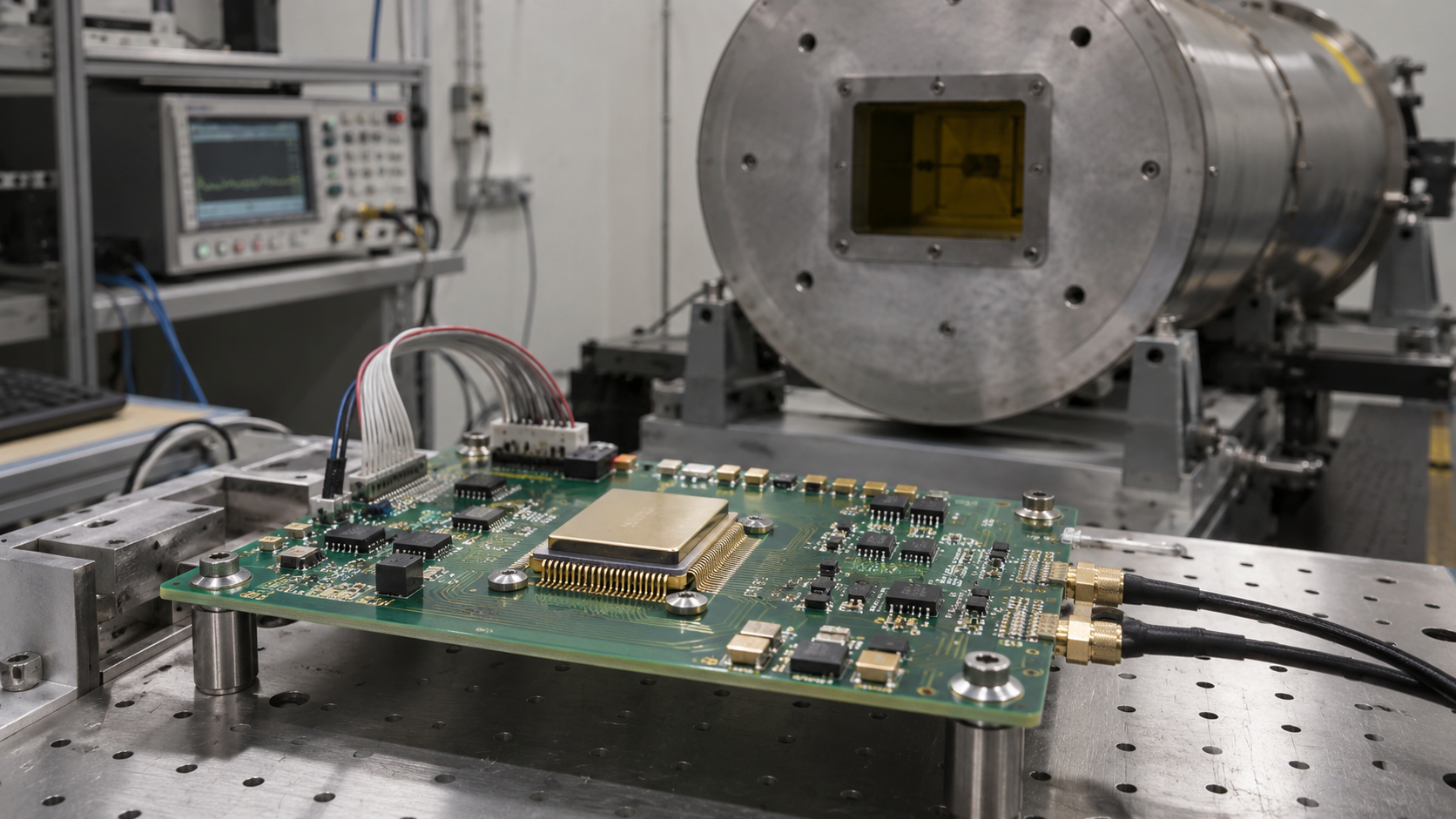
Building Processors That Can Survive Space
Spaceflight computers must combine useful processing capability with resilience and controlled power consumption. NASA’s High Performance Spaceflight Computing project addresses those requirements as a connected system.
Spaceflight computers must combine useful processing capability with resilience and controlled power consumption. NASA’s High Performance Spaceflight Computing project addresses those requirements as a connected system.
- HPSC targets substantially more capability than legacy space processors.
- Fault tolerance and radiation resilience are essential design requirements.
- Adjustable power supports different mission phases and operating budgets.
Computing Within a Space Mission
A spacecraft processor may support instrument processing, navigation, communications, and autonomous decisions.
Its performance must be evaluated within the mission’s power and reliability requirements. A short burst of high computational demand creates a different operating condition from an extended low-power cruise phase.
NASA describes HPSC as a next-generation system-on-chip platform with significantly greater computing capability and granular control over active functions and power states.
Reliability Has Several Layers
Radiation can affect electronic behavior in different ways, making both device characteristics and system- level responses important.
Fault-tolerant architecture, error handling, software behavior, and recovery procedures contribute to the result. A processor must also connect with memory, power systems, and the mission’s wider avionics.
The instruction-set architecture defines how software addresses the processor. HPSC’s use of RISC-V provides a programming foundation; its mission resilience depends on the implementation and supporting design.
Testing Is an Engineering Milestone
NASA reported processor testing during 2026, including work intended to characterize performance and operation in demanding space conditions.
Microchip’s October 2026 update described early radiation results and customer evaluations for its PIC64- HPSC series. These updates document development progress; qualification remains connected to particular products and mission requirements.
A performance comparison also needs its reference. Statements about improvements over legacy space processors should not be generalized into comparisons with every current commercial computer.
Power Management Changes What a Mission Can Do
If the processor can reduce activity when a function is unnecessary, the mission can allocate computing resources more selectively.
That flexibility matters when instrument operations, communications, and thermal conditions change over time.
An informative system test would measure useful processing under the required reliability conditions and include the energy used by supporting memory and interfaces. It would also examine recovery behavior when faults occur.
The practical outcome is a computing platform that enables the intended mission workload within its operating constraints. Peak processing capability is one part of that assessment, alongside sustained behavior and dependable recovery.
Sources: NASA HPSC overview; NASA’s processor-testing update; Microchip’s October 2026 milestones.
Explore Embedded Science or purchase a membership. Purchases do not automatically renew.