ADVERTISE WITH USReach Embedded Science readers →
Europe’s Reusable Launch Systems Move Toward Flight
European reusable-launch research is testing the hardware and procedures needed to recover a rocket stage. Themis and its Prometheus engine address different parts of that combined engineering problem.
European reusable-launch research is testing the hardware and procedures needed to recover a rocket stage. Themis and its Prometheus engine address different parts of that combined engineering problem.
- Themis is a demonstrator for rocket recovery and reuse.
- Prometheus is designed for restartable operation using methane and oxygen.
- Rehearsals and engine tests establish different forms of readiness.
Reuse Requires More Than a Landing Plan
A reusable stage must support ascent, controlled return, landing, inspection, and another flight.
That sequence places requirements on the engine, tanks, structures, power systems, avionics, and control software. Each part must operate within the conditions created by the others.
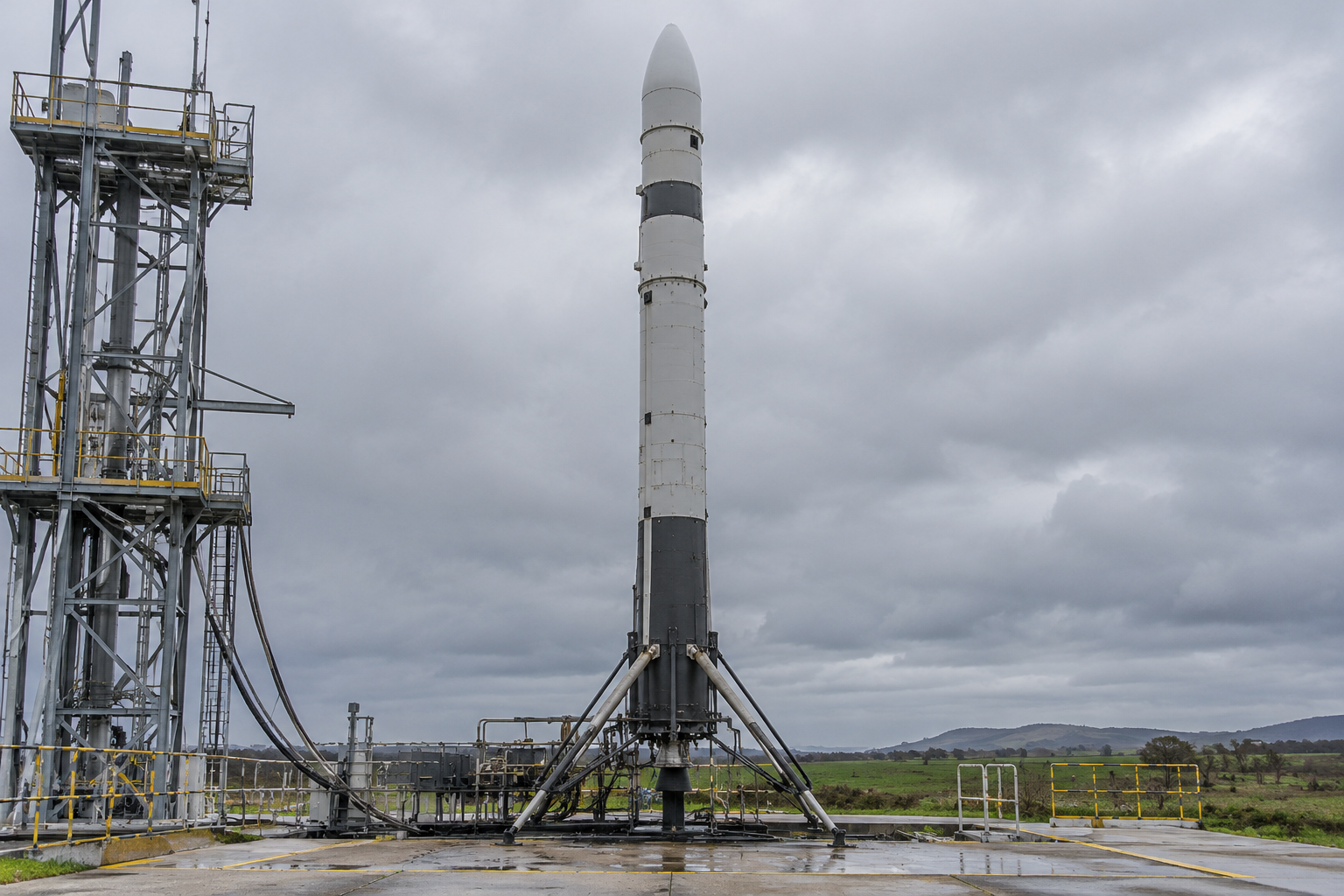
ESA describes Themis as a prototype intended to demonstrate low-cost recovery and reuse technologies. ArianeGroup is its prime contractor, and Prometheus provides the reusable engine.
Why Engine Restart Matters
A returning stage can require multiple engine operations during descent.
Prometheus uses liquid methane and liquid oxygen and is designed for restartability. Themis also includes systems such as landing legs, aerodynamic stabilizers, and the avionics needed to control the return.
The objective is coordinated behavior across a changing flight environment. Engine performance alone cannot establish that the complete vehicle can return safely.
What a Rehearsal Tests
ESA reported Themis’s first wet dress rehearsal in July 2026 at Esrange Space Center in Sweden.
The stage was filled with cryogenic liquid nitrogen to practice procedures and examine the integrated system under relevant cold and pressurized conditions. This rehearsal did not use the operational methane- and-oxygen propellant combination.
A rehearsal tests equipment and operating sequences without reproducing every condition of flight.
Separately, ESA reported Prometheus hot-fire testing at the improved P5 test bench in Germany on October 29, 2026. Engine firing provides another category of evidence.
Repeated Use Determines the Practical Benefit
Recovering a stage creates the possibility of reuse. Establishing the benefit requires examining what happens between missions.
Inspection needs, component replacement, turnaround time, and the number of successful reuses all affect the result. A stage that lands but requires extensive rebuilding presents a different operating model from one that can return to service quickly.
The current demonstrations are therefore building evidence across several steps. Ground procedures, engine behavior, integrated vehicle operation, and eventual repeated flights each answer a different question about a reusable system.
Sources: ESA Themis overview; Themis rehearsal report; Prometheus hot-fire update.
Explore Embedded Science or support independent reporting. Purchases do not automatically renew.