ADVERTISE WITH USReach Embedded Science readers →
NASA’s X-59 and Quieter Supersonic Flight
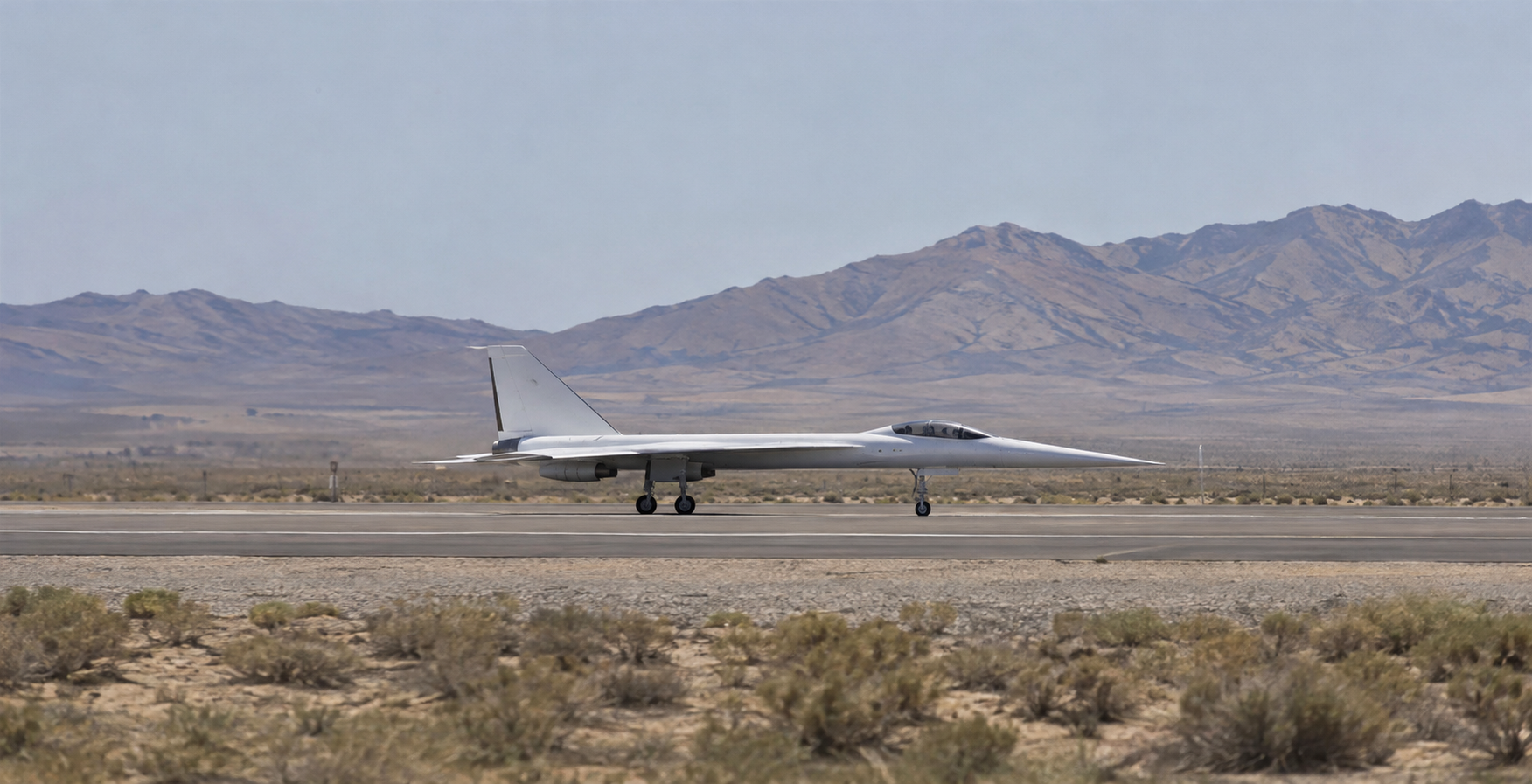
NASA’s X-59 research aircraft is progressing through flight testing toward acoustic validation. The Quesst mission connects aircraft design with measurements of how people experience supersonic sound on the ground.
NASA’s X-59 research aircraft is progressing through flight testing toward acoustic validation. The Quesst mission connects aircraft design with measurements of how people experience supersonic sound on the ground.
- Aircraft shape controls how shock waves develop and combine.
- Flight testing establishes performance across required operating conditions.
- Community-response measurements are a separate mission stage.
Designing the Sound Reaching the Ground
A supersonic aircraft produces pressure disturbances that can reach the ground as a sonic boom. NASA’s X- 59 is shaped to reduce the loudness of that disturbance.
Quesst has two connected goals: demonstrate the quiet-supersonic technology and gather public-response data that regulators can use when evaluating acceptable noise thresholds.
The research therefore extends beyond whether the aircraft can fly faster than sound. It asks what sound reaches people under relevant operating conditions and how those people respond.
What Flight Testing Has Established
NASA reported on October 28, 2026 that the aircraft had completed its first flight one year earlier and subsequently flown 40 additional times.
The agency stated that testing had reached speeds up to Mach 1.53 and altitudes above 56,000 feet. The work was continuing to expand and validate the flight envelope while preparing for acoustic testing.
Those are flight-test milestones. They do not establish that the community-response phase has already been completed.
Why Acoustic Validation Comes Next
An aircraft design has to perform in the atmosphere rather than only in a calculation.
Acoustic validation examines whether the pressure signature behaves as intended during flight. The measurements must connect the aircraft’s operating conditions with the sound reaching the ground.
NASA describes intended quiet-supersonic operation near Mach 1.4 and 55,000 feet. Establishing the resulting acoustic performance is part of the test program.
The distinction between flight performance and acoustic performance is useful: an aircraft can meet a speed target while further measurements are still needed to characterize its sound.
From Engineering Measurements to Public Response
Quesst’s mission plan separates construction, flight and acoustic testing, and community overflights.
During the community phase, NASA intends to collect residents’ responses and provide the resulting dataset to national and international regulators.
That process connects a physical measurement with a human outcome. Two sound signatures can differ in ways that matter to perception beyond a single headline description.
The X-59 remains a research aircraft supporting this evidence-gathering program. Decisions about future commercial operations require the resulting measurements and the appropriate regulatory process.
Sources: NASA Quesst mission; X-59 aircraft overview; NASA’s October 2026 flight update.
Explore Embedded Science or purchase a membership. Purchases do not automatically renew.