ADVERTISE WITH USReach Embedded Science readers →
Explainable AI (XAI) and the Future of Generative AI
Explainable AI (XAI) and the Future of Generative AI
-
Bridging the Black Box Gap: Explainable AI (XAI) translates complex, opaque neural network operations into human-understandable concepts, ensuring models act transparently rather than as inscrutable “black boxes.”
-
Transforming Generative AI Trust: By exposing the internal reasoning, underlying data reliance, and decision-making pathways of generative models, XAI mitigates hallucinations, biases, and safety risks in real-time deployment.
-
Empowering Human-AI Collaboration: XAI bridges the gap between autonomous AI capabilities and human oversight, enabling engineers, safety drivers, and end users to accurately predict, diagnose, and correct model errors.
Introduction: What is Explainable AI (XAI)?
As artificial intelligence systems grow in power and complexity, their internal decision-making processes become increasingly opaque. Deep learning architectures—comprising millions or billions of parameters—often operate as “black boxes.” While they can process multimodal data and make high-stakes predictions or generate complex content, understanding why or how they reached a particular output is exceedingly difficult.
Explainable AI (XAI) is a set of processes, tools, and methodologies designed to make the outputs and internal reasoning of machine learning models transparent, interpretable, and understandable to human operators. Rather than relying solely on raw inputs and end outputs, XAI methods expose intermediate concepts, feature importance scores, and causal relationships within the neural network.
The core goal of XAI is to establish causal faithfulness—ensuring that the explanation provided to a user reflects the actual logic used by the model, rather than presenting a plausible-sounding justification that diverges from the algorithm’s real process.
Why XAI Matters in High-Stakes Environments
In low-stakes consumer applications, an unexpected AI output might be minor or amusing. However, in safety-critical and regulated domains—such as autonomous driving, healthcare diagnostics, legal technology, and financial underwriting—an unexplained AI error can have catastrophic consequences.
Key benefits of implementing XAI include:
-
Safety and Reliability: Identifying failure modes, such as phantom braking in self-driving vehicles or misdiagnoses in medical imaging, before they lead to real-world harm.
-
Bias and Fairness Auditability: Exposing hidden biases within training data or feature weights, ensuring decisions do not discriminate against protected classes.
-
Regulatory Compliance: Meeting mandates like the EU AI Act and GDPR’s “right to an explanation,” which require organizations to provide clear rationale for automated decisions affecting individuals.
-
User Trust and Mental Models: Helping human operators build accurate mental models of AI capabilities and limitations, allowing them to intervene appropriately when the system encounters edge cases.
How XAI Will Transform Generative AI
Generative AI models—such as Large Language Models (LLMs), diffusion image generators, and multimodal foundation models—represent some of the most complex black boxes in computer science. While capable of generating human-like text, code, images, and audio, they frequently suffer from hallucinations, bias amplification, and unpredictable behavior.
XAI promises to reshape the trajectory of Generative AI across several key dimensions:
Mitigating Hallucinations and Ungrounded Claims
Generative models often state incorrect facts with absolute confidence. XAI techniques integrate concept classifiers and factual attribution pathways into generative architectures. By forcing models to route generation through identifiable, verified concepts or source documents, users can trace every generated statement back to its underlying reasoning or reference data.
Concept-Level Steerability and Control
Traditional prompt engineering relies on trial and error to guide generative outputs. XAI introduces concept-wrapper networks and explicit feature mapping into generative models. This allows developers to directly inspect and modulate high-level concepts (e.g., tone, style, factual constraints, safety boundaries) in real time during the generation process.
Real-Time Safety and Alignment Verification
Instead of inspecting generative outputs after they are produced, XAI enables real-time auditing of internal model states. If a generative system begins assembling unsafe, non-compliant, or biased outputs, internal XAI monitors can flag the divergence instantly, halting generation or re-routing the output through corrective safety layers.
Engineering Diagnostics and Troubleshooting
For developers building generative systems, fine-tuning complex weights often feels like guesswork. XAI provides transparent feedback loops, revealing exactly which layers or training concepts triggered a failure. This drastically reduces debugging cycles and accelerates the development of reliable enterprise-grade models.
Real-World Case Study: CW-Net and Autonomous Systems
A prime example of XAI in action comes from research developed by MIT and Motional. Their novel system, the Concept-Wrapper Network (CW-Net), demonstrates how concept-level explainability directly improves human oversight in autonomous systems.
The Problem
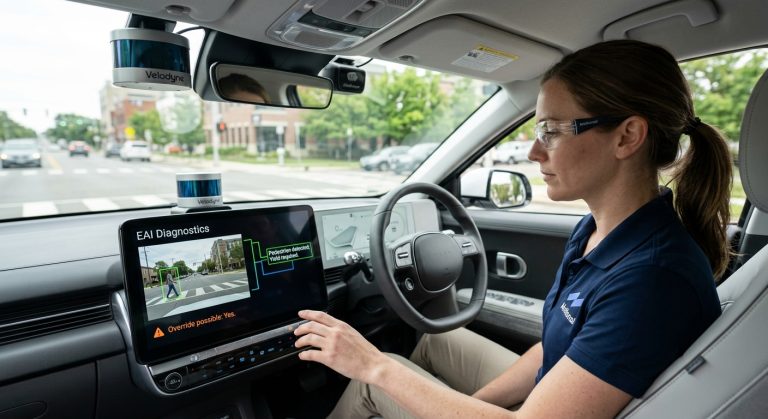
Self-driving vehicles rely on deep learning planners to process sensor data and plan driving trajectories. When a vehicle makes an unexpected decision—such as suddenly braking without an obvious obstacle—safety drivers and engineers are left guessing whether the car detected a hazard or encountered a system glitch.
The XAI Solution
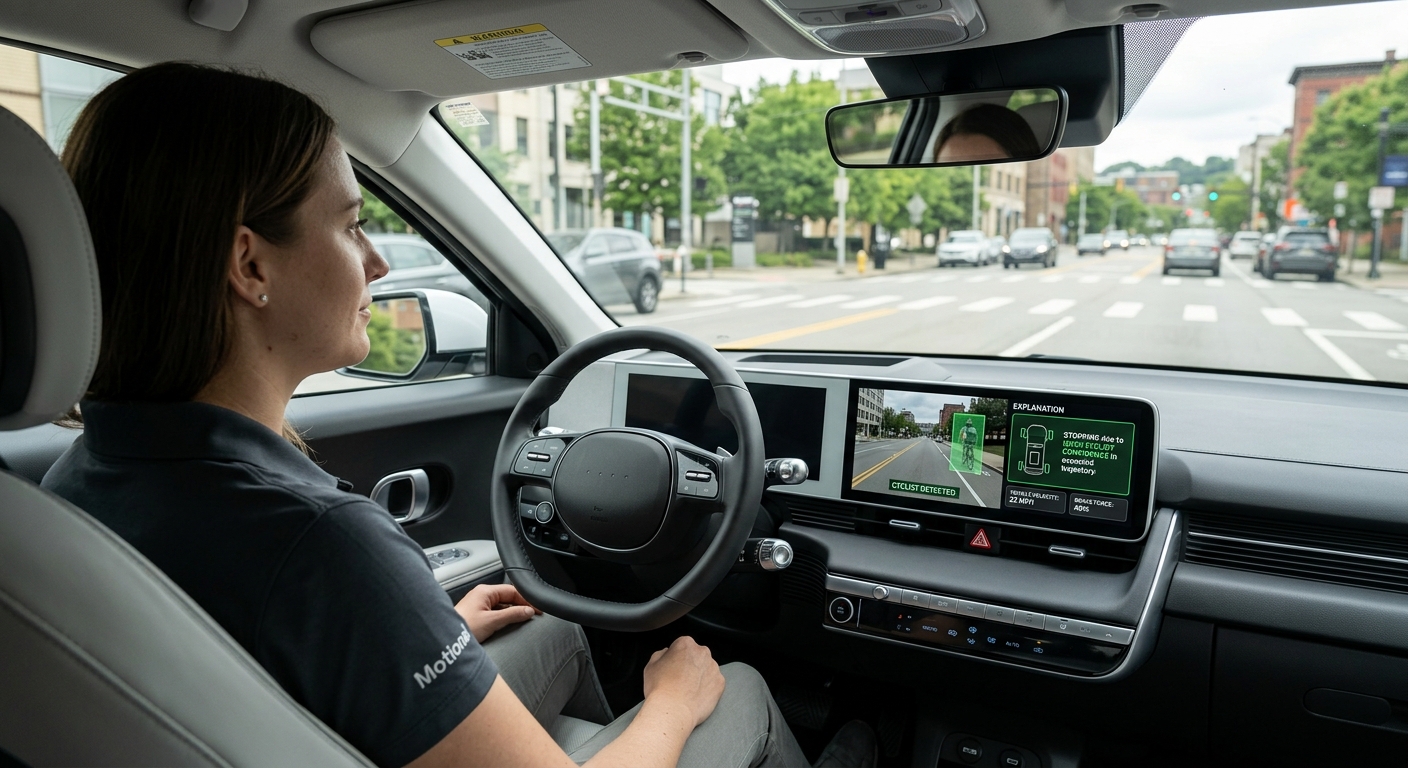
CW-Net acts as a concept classifier inserted directly into the vehicle’s machine-learning planner architecture. It translates the internal reasoning of the planner into clear, human-understandable concepts (e.g., “approaching stopped vehicle” or “close to cyclist”) and forces the planner to use those concepts to determine its trajectory.
Key outcomes of the study include:
-
Faithful Real-Time Feedback: CW-Net outputs concepts in real time along with the car’s trajectory, providing continuous feedback without degrading driving performance.
-
Correcting Human Misconceptions: In track tests, a test vehicle consistently stopped for a cyclist. Safety drivers assumed the system detected the cyclist correctly, but CW-Net explanations revealed the model failed to detect the cyclist and stopped only because an emergency safety buffer was triggered.
-
Improved Safety Intervention: Armed with accurate explanations, safety drivers could anticipate vehicle mistakes sooner and disengage autonomous mode before a hazardous situation occurred.
Original Article from MIT
-
Article Title: System helps humans predict when self-driving cars will make mistakes
-
Authors: Adam Zewe (MIT News), featuring research led by Eoin Kenny, Julie Shah, Momchil Tomov, and Motional team members.
-
Publication Date: September 2, 2026
-
Key Focus: Explaining how MIT and Motional’s CW-Net architecture uses causally faithful concept classification to improve human situational awareness and predict autonomous vehicle mistakes.