ADVERTISE WITH USReach Embedded Science readers →
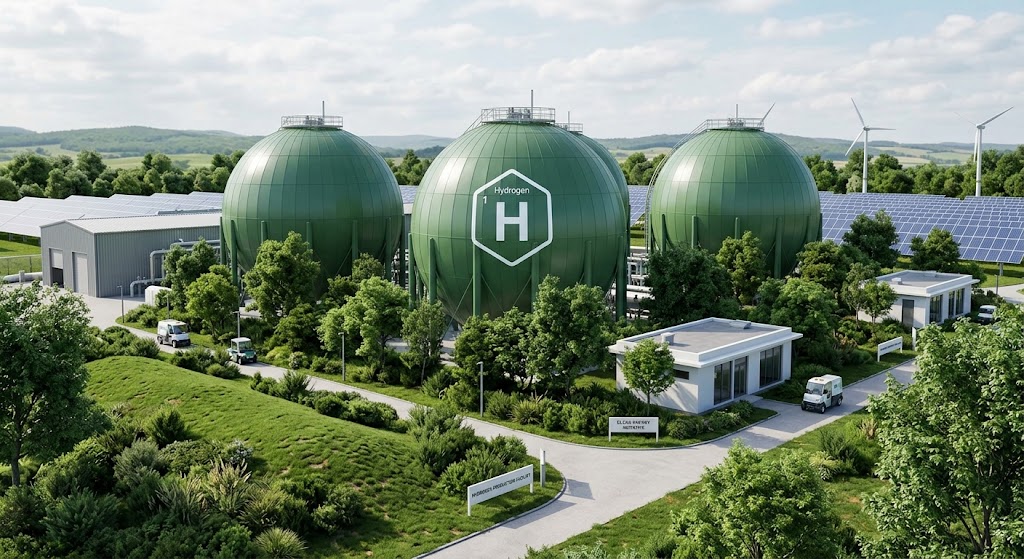
Stanford’s Methane Pyrolysis Breakthrough: What it means for AI
Researchers at Stanford University published a process in Science that addresses the main bottlenecks of clean hydrogen production via methane pyrolysis—a method that breaks methane into hydrogen gas and solid carbon rather than emitting $\text{CO}_2$ gas.
-
The Core Innovation (Autothermal Heating): Industrial pyrolysis requires extremely high temperatures (around $1000^\circ\text{C}$). Standard external heating is highly inefficient at scale. Stanford researchers introduced an internal burner that selectively combusts a small portion of the produced hydrogen within the reactor. This generates water vapor instead of carbon emissions while driving the reaction forward, yielding roughly a tenfold increase in efficiency over conventional methods.
-
The High-Value Byproduct: The process unexpectedly yields high-quality graphite as a solid byproduct. While further refining is required for high-demand applications like battery anodes, it offers a viable path toward domestic production of critical materials.
Functional Analysis: Clean Hydrogen, AI Energy Demands, and Future Realities
The relationship between hydrogen as a “bedrock” clean energy source and the surging electricity demands of Artificial Intelligence can be framed through technical realities and practical trade-offs:
1. Hydrogen’s Strategic Position for AI Infrastructure
-
Grid Augmentation & On-Site Generation: AI compute clusters and data centers require massive, 24/7 baseload power, stretching public electrical grids to capacity. Modular fuel cells using clean hydrogen can provide off-grid, continuous, zero-emission electricity directly at data center locations, bypassing grid-connection backlogs.
-
Backup Power Replacement: Data centers rely on heavy diesel generators for emergency backup power. Fuel cells powered by hydrogen offer a direct, zero-emission alternative that meets stringent environmental air-quality permitting standards without output degradation.
2. Realistic Constraints & Practical Pitfalls
-
Energy Round-Trip Inefficiency: Using electricity to produce hydrogen (via electrolysis) and then reconverting that hydrogen back into electricity (via fuel cells) suffers from systemic conversion losses ($40\text{–}50\%$ energy loss). While methane pyrolysis (as in the Stanford study) avoids electrolysis energy costs, converting methane into hydrogen still requires significant primary thermal energy. Direct grid or renewable power remains far more energy-efficient when available.
-
Infrastructure Deficits: Transporting, compressing, and storing bulk hydrogen requires specialized pipelines and heavy high-pressure tanks. Scaling hydrogen for AI energy infrastructure requires massive capital expenditures before it can operate as a primary power solution.
-
Primary Industrial Role First: Clean hydrogen’s immediate economic value lies in hard-to-abate primary sectors where direct electrification is impossible—such as ammonia/fertilizer synthesis, steelmaking, and high-heat manufacturing—rather than pure data center power generation.
3. Where AI Reciprocates
-
Optimizing Production: AI algorithms (machine learning models) are being actively deployed to optimize reactor temperatures, fluid dynamics, and catalyst behaviors in complex reactions like autothermal pyrolysis and electrolyzer controls.
-
Grid Optimization: AI helps schedule energy generation, predicting when excess renewable power can be directed into hydrogen production versus direct grid usage.