ADVERTISE WITH USReach Embedded Science readers →

Autonomous Guided Vehicles: What Makes Them Outperform Legacy Behavioral Software
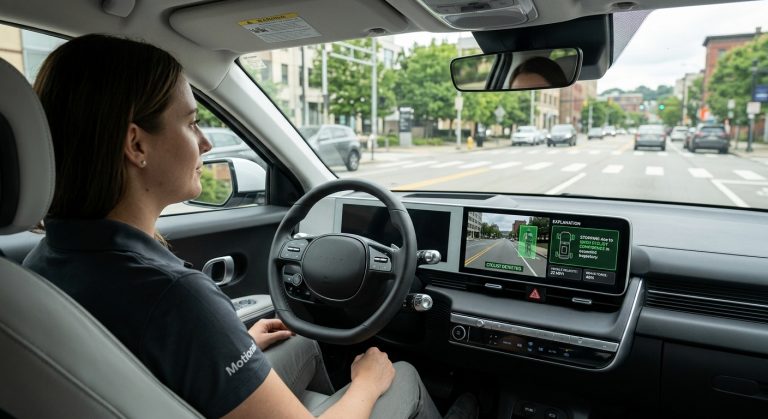
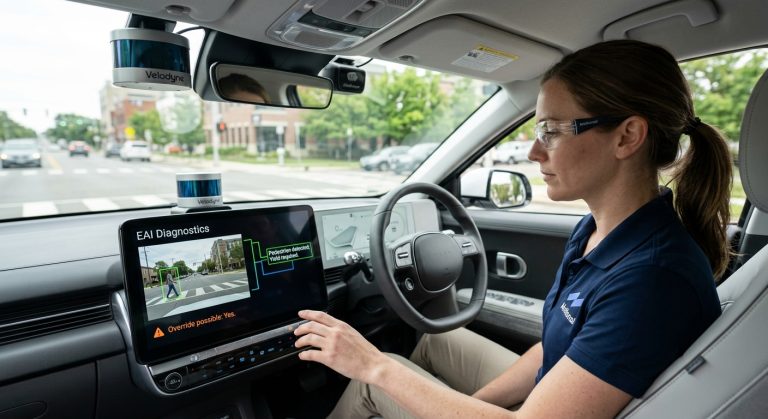
In a profound shift away from legacy rule-based software, modern automated guided vehicles and autonomous trucks are adopting End-to-End neural networks and World Models to navigate high-speed highways. By mapping raw sensor data directly to vehicle control commands, these advanced AI architectures eliminate sequential latency and seamlessly generalize across complex, unprogrammed edge cases.
-
The Failure of Rules: Classical behavioral software models fail on high-speed highways due to the “long-tail problem,” where rare, unprogrammed edge cases cause algorithmic freezing or erratic interventions.
-
The Power of Unified Paradigms: End-to-End (E2E) autonomous driving architectures utilize fully differentiable neural networks to map multimodal inputs (LiDAR, radar, cameras) directly to steering, braking, and acceleration.
-
Academic Validation: Elite global universities, including the Technical University of Munich and Stanford, are actively proving that deep predictive foundation models provide the robust safety guardrails required for high-speed industrial logistics.
The Fragility of Behavioral Software on High-Speed Thoroughfares
For decades, industrial Automated Guided Vehicles (AGVs) excelled in controlled factory environments by adhering to deterministic, rule-based behavioral models. These architectures split autonomous operation into isolated, sequential tasks: perception, localization, behavior planning, and execution control. In a structured warehouse, a simple “if-then” loop—such as halting if a laser scanner detects an obstacle—is highly efficient.
However, translating this sequential approach to high-speed highway environments introduces critical, sometimes catastrophic, vulnerabilities. High-speed driving is inherently dynamic, requiring split-second decisions amid chaotic human interactions. Behavioral software suffers from compounded error propagation; if the initial perception module misclassifies a piece of road debris or a drifting semi-truck, the mistake ripples down the line, leading to flawed behavioral planning and unsafe control outputs.
Furthermore, rule-based systems are incapable of scaling to meet the “long-tail problem”—the infinite universe of unpredictable edge cases, from zipper merges in torrential rain to aggressive cut-ins. Programming explicit rules for every conceivable highway scenario is mathematically impossible. When a behavioral model encounters an unprogrammed state, it reaches an algorithmic impasse, frequently resulting in abrupt, dangerous braking or requiring immediate human intervention. To achieve true safety and efficiency at 65 miles per hour, industrial automated transport requires an entirely different cognitive paradigm.
Technical University of Munich & Stanford: Reshaping Safety with Foundation Models
To transcend the rigid limitations of human-coded rules, elite academic institutions are pioneering the integration of AI foundation models into high-speed autonomous systems. A landmark joint study by the Technical University of Munich (TUM) and Stanford University, titled “Foundation Models in Autonomous Driving: A Survey on Scenario Generation and Scenario Analysis”, establishes a new theoretical and practical benchmark for highway safety.
The TUM and Stanford research explores how Large Language Models (LLMs), Vision-Language Models (VLMs), and generative World Models can be deployed to comprehend high-stakes driving environments. Rather than viewing the road as a collection of isolated bounding boxes, these advanced models possess an intrinsic understanding of physical plausibility and spatial-temporal reasoning.
The study demonstrates that foundation models can analyze ongoing highway scenarios holistically, predicting how human drivers will behave based on subtle contextual cues—such as a vehicle tilting slightly before changing lanes without a turn signal. By utilizing these models, next-generation AGVs do not merely react to an event after it occurs; they actively anticipate environmental evolutions seconds into the future. This transition from reactive rule-following to predictive semantic reasoning represents the crucial breakthrough needed to handle complex highway maneuvers safely.
The arXiv Global Survey: Overcoming the Limitations of Classical Pipelines
The massive shift away from legacy modular code is further codified in a comprehensive global university collaboration indexed on arXiv, titled “End-to-end Autonomous Driving: Challenges and Frontiers”. Reviewing more than 270 foundational papers, this landmark survey highlights how End-to-End (E2E) learning platforms completely redefine the vehicle’s computational pipeline.
In an E2E framework, the traditional, fractured boundaries between perception and planning are entirely dissolved. The system utilizes a single, fully differentiable deep neural network that ingests raw multimodal sensor data—combining high-resolution camera feeds, LiDAR point clouds, and radar signals—and outputs direct vehicle motion plans.
According to the survey’s findings, the primary advantage of E2E autonomous driving is the massive reduction in information loss. In classical pipelines, rich environmental context is aggressively filtered out to fit into human-designed data formats (like simple 3D bounding boxes). E2E networks, by contrast, preserve continuous feature representations across the entire system. This allows the vehicle to optimize its pathing based on the complete visual and spatial texture of the highway, significantly reducing computational latency and maximizing processing efficiency when moving at high velocities.
Carnegie Mellon University: Forging the Path for End-to-End Integration and Guardrails
While modern deep learning has accelerated the deployment of E2E systems, the concept itself traces its lineage back to Carnegie Mellon University (CMU). In the late 1980s, CMU researchers developed ALVINN (Autonomous Land Vehicle In a Neural Network), proving that a simple connectionist system could learn to steer a vehicle along public roads by observing human drivers.
Today, CMU’s robotics and vehicle intelligence laboratories continue to lead the industry by addressing the primary challenge of pure E2E systems: interpretability and safety verification. Because deep neural networks operate as “black boxes,” verifying exactly how a decision was reached can be difficult. CMU’s current research focuses on a hybrid architecture that pairs the fluid, adaptive capabilities of E2E networks with lightweight, deterministic safety guardrails.
In this paradigm, the E2E neural network dynamically calculates the most natural, human-like trajectory for navigating highway interchanges, merging lanes, and avoiding obstacles. Before that trajectory is executed by the vehicle’s actuators, however, it passes through a mathematically verifiable safety layer. This layer checks the proposed path against absolute physical laws (such as friction coefficients, braking distances, and roll risk). If the neural network’s plan violates a safety boundary, the deterministic guardrail instantly modifies the command, combining the intuitive adaptability of advanced AI with the unyielding safety guarantees of classical engineering.
The Synergy of World Models and Physical Infrastructure
The final frontier in developing highway-ready AGVs lies in the synergy between internal AI cognition and external physical infrastructure. Modern academic literature emphasizing World Models highlights that an autonomous vehicle operates best when it can seamlessly validate its internal simulations against predictable physical cues.
When an E2E-driven autonomous truck enters a highway, its internal World Model continuously runs parallel simulations of potential futures. To ensure these simulations remain perfectly aligned with reality, physical infrastructure enhancements—such as highly consistent, high-contrast lane markings and recurring spatial transponders—act as vital anchors. University field testing indicates that when advanced E2E architectures are deployed on modernized smart highways, the vehicle’s margin of error approaches zero. By replacing rigid behavioral software with predictive, unified neural networks, the next generation of automated logistics platforms will navigate our high-speed corridors with unprecedented safety, precision, and efficiency.