ADVERTISE WITH USReach Embedded Science readers →
The AI-Defined Vehicle: Architecture, Intelligence, and the RISC-V Transition
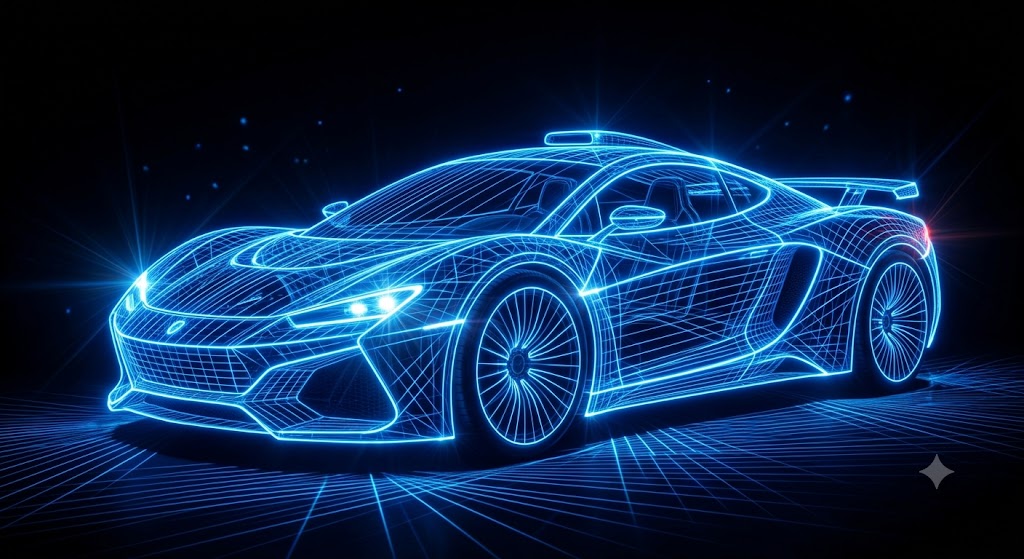
As the automotive industry pivots from the “Software-Defined Vehicle” (SDV) era to the “AI-Defined Vehicle” (AIDV), we are witnessing a fundamental shift in how vehicles are conceived, engineered, and operated. While an SDV uses software to manage vehicle behavior and enable over-the-air updates, an AI-Defined Vehicle treats artificial intelligence as a primary, foundational component. These vehicles are designed for continuous adaptation, using advanced perception, reasoning, and interaction to navigate complex environments rather than relying on rigid, pre-programmed logic.
Key Pillars of the AIDV Era
-
Perpetual Adaptation: AIDVs move beyond static software by integrating continuous learning and reasoning. They utilize end-to-end neural networks and Vision-Language-Action (VLA) models to interpret real-time contexts, allowing the vehicle to learn from traffic patterns, driver behavior, and environmental changes.
-
Centralized Compute Architectures: The fragmented electronic control unit (ECU) model is being replaced by high-performance, centralized “superbrains.” These platforms handle everything from sensor fusion and autonomous driving to in-cabin immersive experiences, significantly simplifying hardware complexity and improving update reliability.
-
Hardware-Software Co-Design: To achieve the necessary efficiency and power, OEMs and hyperscalers are increasingly moving toward bespoke, custom silicon. This includes a push for specialized AI accelerators and advanced chiplet packaging that allows for modular, scalable performance across different vehicle segments.
The Compute Landscape: Who is Driving the Innovation?
The competition in the AIDV sector is defined by high-performance computing (HPC) platforms capable of processing massive data throughput. NVIDIA continues to lead this charge, with its DRIVE Thor and the newly unveiled Vera Rubin platform setting benchmarks for AI compute. These architectures are designed to support the intensive inference requirements of L4 autonomy and agentic AI.
Alongside chip giants, specialized software firms like Cerence and Master of Code Global are building the “intelligence layer” that runs on top of this hardware. These companies focus on agentic AI, voice interfaces, and personalization, ensuring that the in-cabin experience is as dynamic as the autonomous driving capabilities.
The Open-Source Frontier: The RISC-V Shift
A critical trend shaping 2026 is the gradual transition of embedded automotive chips from proprietary architectures, like Arm, to the open-source RISC-V instruction set architecture (ISA).
Historically, Arm has dominated the automotive embedded market due to its mature ecosystem and safety certifications. However, the RISC-V architecture is gaining momentum because it offers architectural flexibility and royalty-free licensing. This allows engineering teams to tailor silicon to specific workloads—such as sensor processing or power management—without the overhead of unnecessary instructions found in legacy ISAs.
While RISC-V faces hurdles in software maturity and high-level safety certification compared to Arm, its adoption is shifting from experimental to production-ready planning. Major suppliers like Infineon have already begun integrating RISC-V into their automotive microcontroller lines, signaling that the future of the AIDV will likely be a hybrid landscape where performance-critical AI tasks and energy-efficient embedded controls coexist on a diverse foundation of both established and open-source silicon.
Further Reading
-
When AI takes the wheel: AI-defined vehicles principles and pitfalls: A foundational PMC analysis defining the shift from SDV to AIDV.
-
RISC-V Architecture: What Engineers Need to Know in 2026: A technical deep dive into the ecosystem maturity and automotive readiness of the RISC-V ISA.